 SKY
Sky catalog › Nebulae
Crab Nebula
M1, NGC 1952 · A supernova remnant in Taurus
What is it?
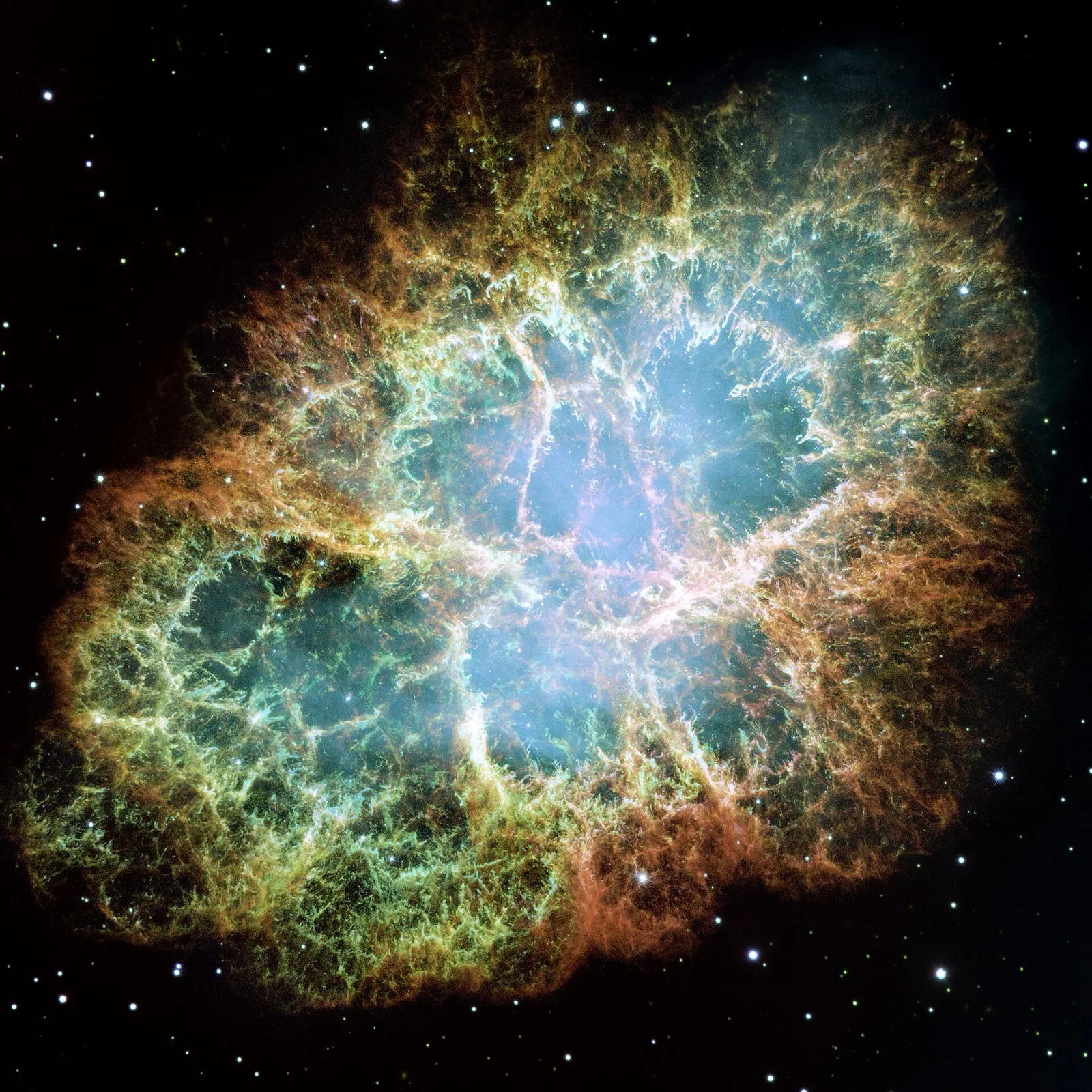
Crab Nebula is a supernova remnant. The expanding wreckage of a star that exploded.
Why the Crab Nebula is interesting
What you see: The tangled threads are the star's old outer layers, mostly hydrogen and helium gas. The blue haze comes from fast electrons spiraling in magnetic fields, powered by the spinning pulsar at the center. en.wikipedia.org
How it formed: A star of about 9 to 11 times the Sun's mass exploded in a supernova seen in 1054. Its core collapsed into a neutron star that spins about 30 times a second. en.wikipedia.org
To scale: The neutron star at its heart is only about 28 to 30 km (17 to 19 miles) across: a car at 60 mph would drive across it in under 20 minutes. en.wikipedia.org
Three things to know
- The Crab Nebula is what is left of a star that exploded in 1054, so bright that people could see it in daytime for nearly a month.
- At its heart is a neutron star only about 30 km across that spins about 30 times every second.
- Charles Messier first thought it was Halley's Comet, and that mix-up inspired his famous catalog.
12 more fun facts
- Wisps of gas near the Crab's central pulsar are moving outward at about half the speed of light. science.nasa.gov
- The Crab is expanding at about 1,500 km (930 miles) per second, roughly half a percent of the speed of light. en.wikipedia.org
- The Crab's eerie blue glow, made by fast electrons spiraling in magnetic fields, shines about 148,000 times as brightly as the Sun, powered by the slowing pulsar. en.wikipedia.org
- The pulsar at the Crab's heart was discovered on November 10, 1968, with the giant Arecibo radio telescope in Puerto Rico. en.wikipedia.org
- Chinese records say the 1054 star stayed visible to the naked eye for a total of 642 days. en.wikipedia.org
- When Saturn's moon Titan passed in front of the Crab in 2003, the Chandra X-ray telescope used it to measure Titan's atmosphere: about 880 km (550 miles) thick. en.wikipedia.org
- Saturn passed in front of the Crab on January 4, 2003, the first time since December 31, 1295. en.wikipedia.org
- Every June the Sun's outer atmosphere passes in front of the Crab, and changes in its radio waves let astronomers study the Sun's corona. en.wikipedia.org
- Chandra found a bright ring around the pulsar made of about two dozen knots that appear, brighten, fade and sometimes flare up. chandra.harvard.edu
- In 2023 the Webb telescope made the first complete map of where dust sits in the Crab, showing it in loop-like ridges. esawebb.org
- Hubble's famous Crab mosaic was stitched together from 24 exposures taken over three months. science.nasa.gov
- The star that exploded probably held about 9 to 11 times the Sun's mass, and most of the gas it threw out is helium. en.wikipedia.org
In the game these unlock one by one as you keep photographing the Crab Nebula.
At a glance
- Type
- Supernova remnant
- Catalog
- M1, NGC 1952
- Constellation
- Taurus
- Distance
- about 6,500 light-years
- Brightness
- magnitude 8.4
- Size in our sky
- about 7 x 5 arcminutes
- Discovered
- John Bevis, 1731
- Position (J2000)
- RA 5h 35m, Dec +22.0°
Looking back in time
The light in this photo left the Crab Nebula about 6,500 years ago, when nobody could write yet (writing began about 5,200 years ago) and the first farming villages were growing.
How to see it yourself
Needs a telescope and a dark sky. Photos show far more than the eye can see.
Finding it: Find Zeta Tauri, the star marking the Bull's eastern horn. Two fainter stars just north of Zeta form a tiny triangle with it; from there shift about half a degree west to reach the Crab.
When to look: Best on winter evenings from mid-northern latitudes; NASA suggests January, when Taurus is high in the south after dark. It can be seen from both hemispheres.
What you will see: Not visible to the naked eye. In small binoculars on a very clear night it is at best a tiny smudge that is easy to miss. A small telescope shows a dim glow, and an 8-inch telescope makes it a reasonably easy target.
Easy to confuse with:
- A comet: Charles Messier first mistook it for a comet; a comet drifts against the stars from night to night, while the Crab never moves.
Best months: December is when it is highest around midnight. About two months later it is highest in the early evening, at around 8 to 9 PM.
Where on Earth: easy from the Northern Hemisphere. South of latitude 58°S it never climbs more than 10° above the horizon.
How it is photographed: long exposures through filters, then the frames are stacked, stretched and combined into color.
Name and story
The name: Lord Rosse observed it at Birr Castle in Ireland in the early 1840s and drew it with arms that looked like a crab's legs. When he looked again in 1848 with a bigger telescope he could not confirm the resemblance, but the name stuck. John Bevis first spotted it in 1731, and Charles Messier made it the first entry in his catalog.
People and history: Chinese astronomers recorded a guest star near the Bull's horn in July 1054. The event also appears in the Japanese diary Meigetsuki and in an account by Ibn Butlan, written in Iraq. A rock painting near Penasco Blanco in Chaco Canyon, New Mexico, may show it next to the Moon, but that idea cannot be confirmed.
Record: In 1989 the Crab became the first confirmed source of very-high-energy gamma rays, above 100 GeV. In 2019 it became the first source ever identified sending gamma rays above 100 TeV.
Explored by: NASA's Chandra X-ray Observatory first looked at the Crab in 1999 and found a bright ring of high-energy particles around the pulsar. Later Chandra images showed jets of matter and antimatter from the pulsar's poles and features nicknamed fingers, loops and bays. In 2011 Chandra watched the Crab during gamma-ray flares.
Test yourself
After every photo of the Crab Nebula the game asks one of these. A right answer earns sky points for your observatory.
What powers the Crab Nebula's eerie blue glow?
- Its fast-spinning central pulsar (the answer)
- Sunlight bouncing off its dust
- Newborn stars inside the cloud
As the pulsar slows down, the energy it loses drives electrons to spiral through magnetic fields, and that makes a blue glow about 148,000 times as bright as the Sun. en.wikipedia.org
What did Charles Messier first mistake the Crab Nebula for?
- Halley's Comet (the answer)
- A pair of close stars
- A new planet past Saturn
Messier was hunting comets, but this fuzzy patch never moved across the sky, so it was not a comet. That mix-up inspired his catalog of fuzzy objects to avoid. en.wikipedia.org
Point a telescope at the Crab Nebula in the game: capture it in real time, then develop the frames like an astrophotographer.
Point a telescope at the Crab NebulaLearn more
- The Messier catalog: 110 things that are not comets
Why a French comet hunter listed fuzzy objects to avoid, and how his list became the favorite checklist of amateur astronomers.
More nebulae
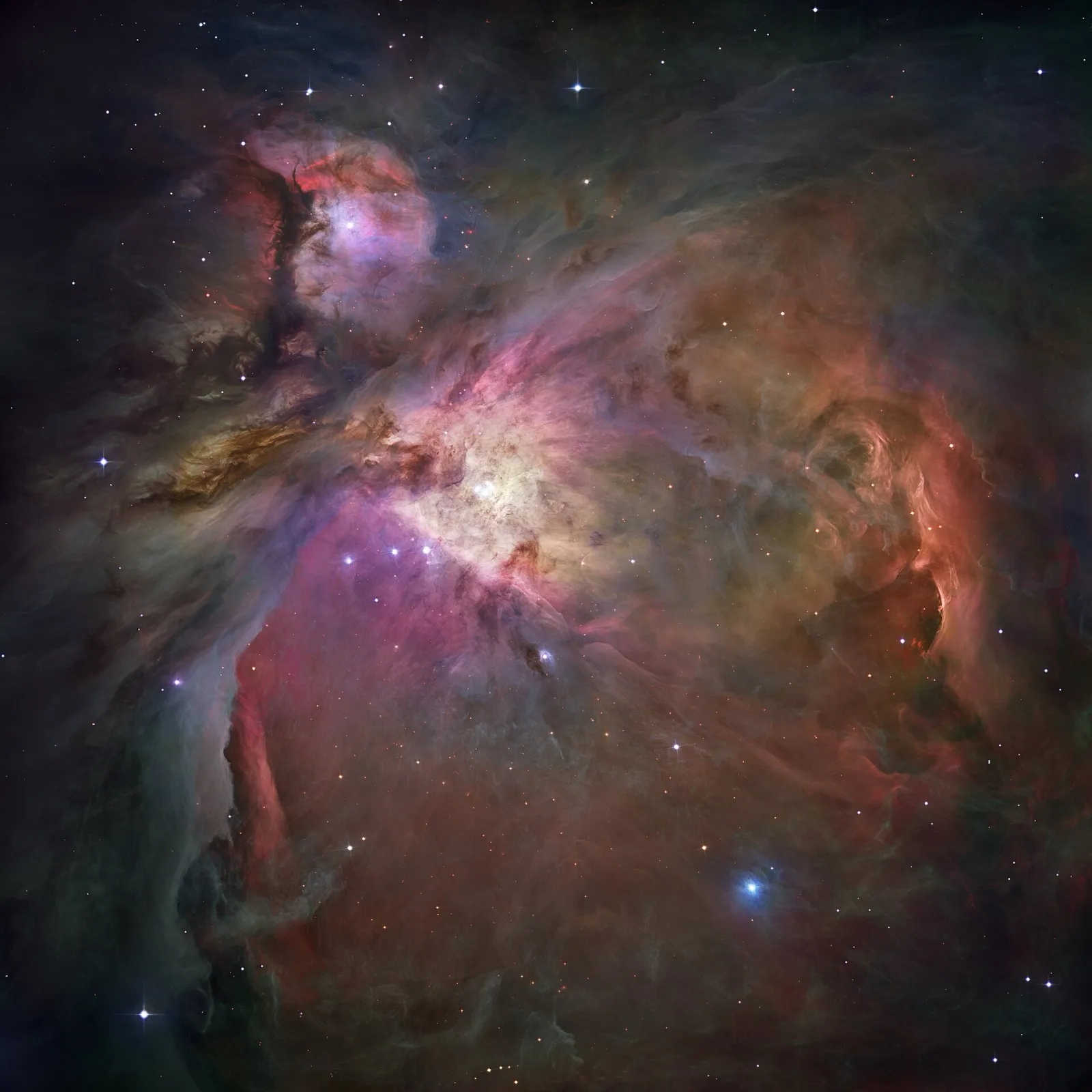 Orion NebulaM42 · star-forming nebula
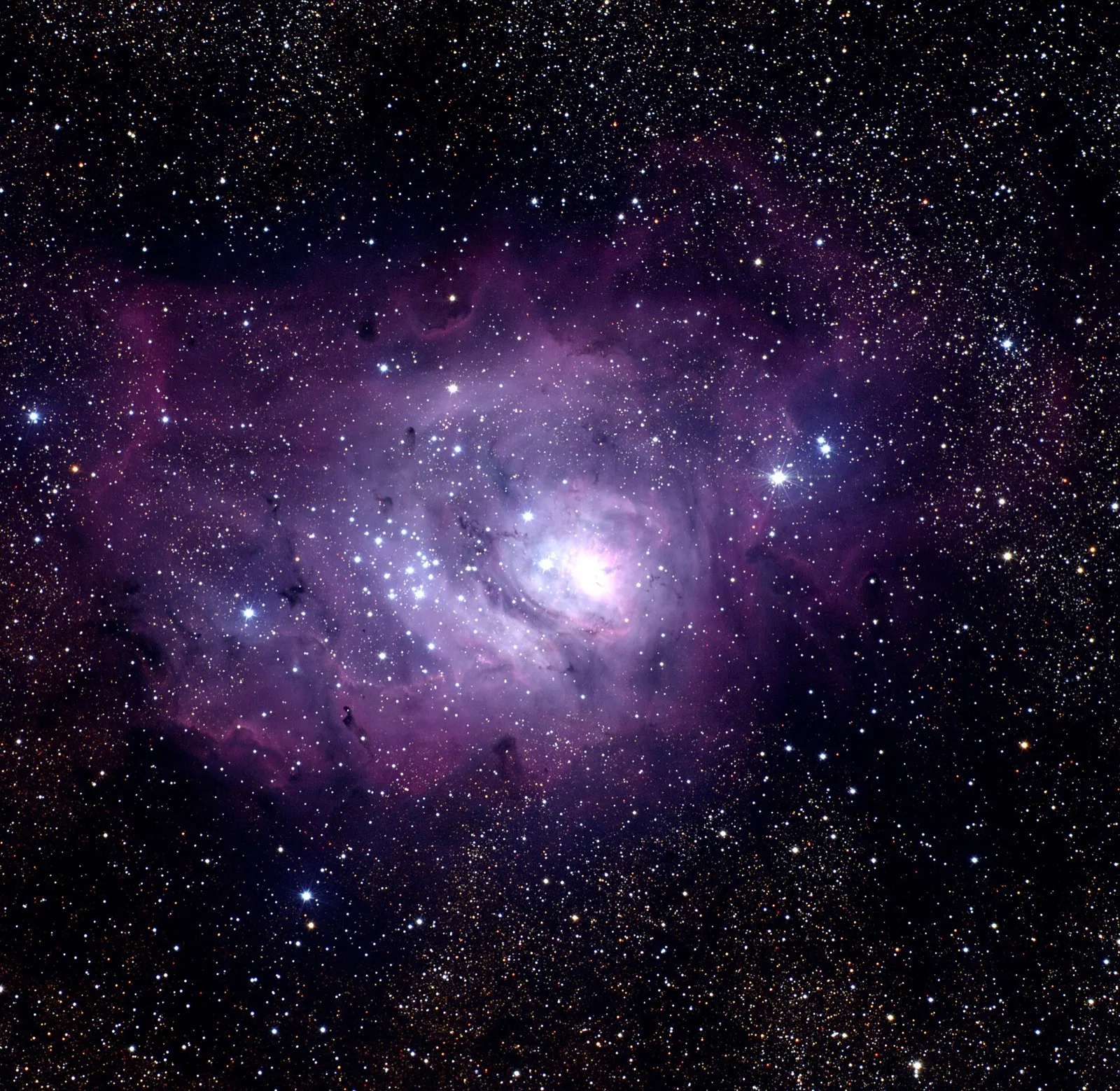 Lagoon NebulaM8 · star-forming nebula
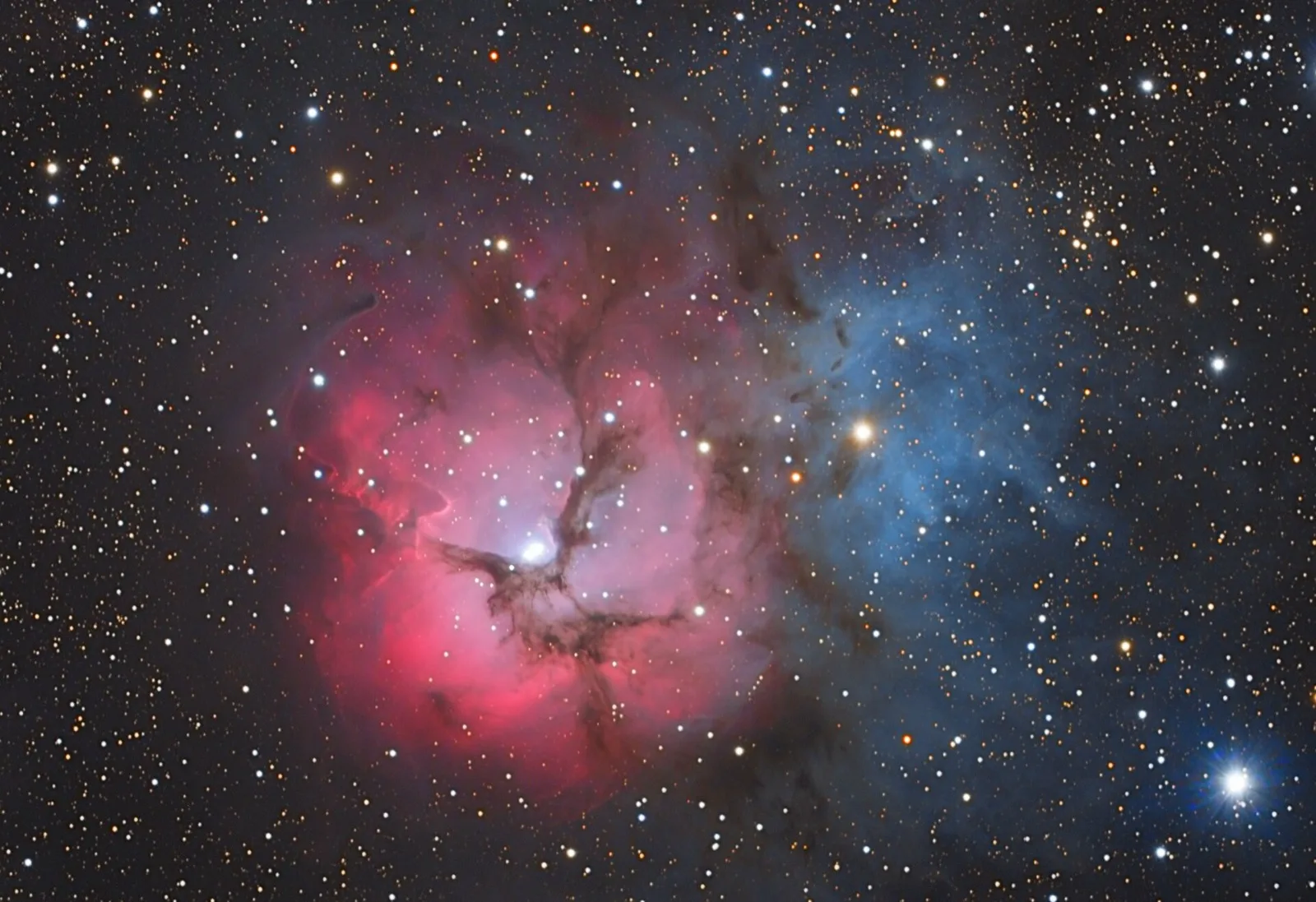 Trifid NebulaM20 · star-forming nebula
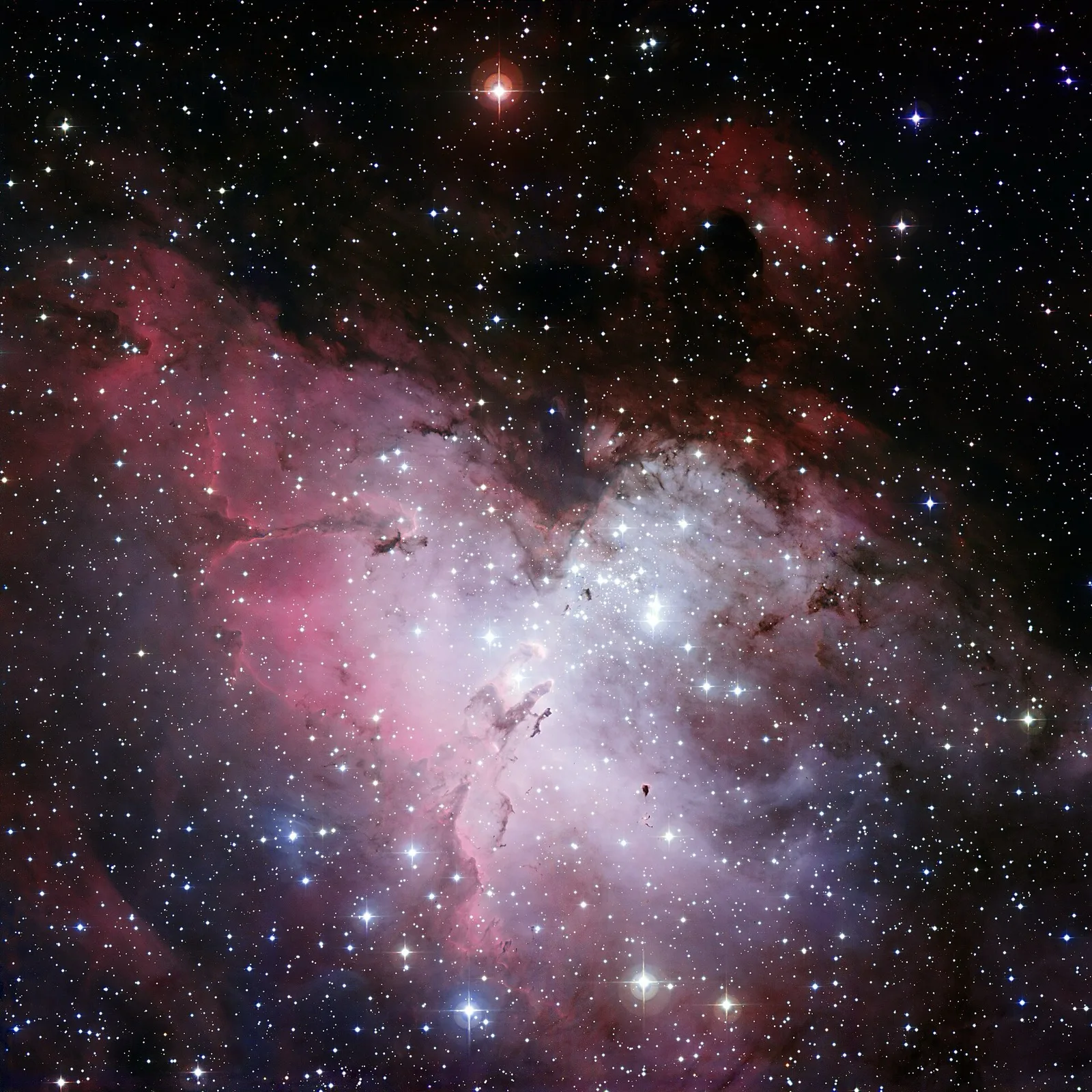 Eagle NebulaM16 · star-forming nebula
Sources
- en.wikipedia.org
- science.nasa.gov
- en.wikipedia.org
- chandra.harvard.edu
- esawebb.org
- astronomy.com
- Positions: astronomy-engine (Don Cross).