 SKY
Sky catalog › Star clusters
Double Cluster
NGC 869 and NGC 884 · An open star cluster in Perseus
What is it?
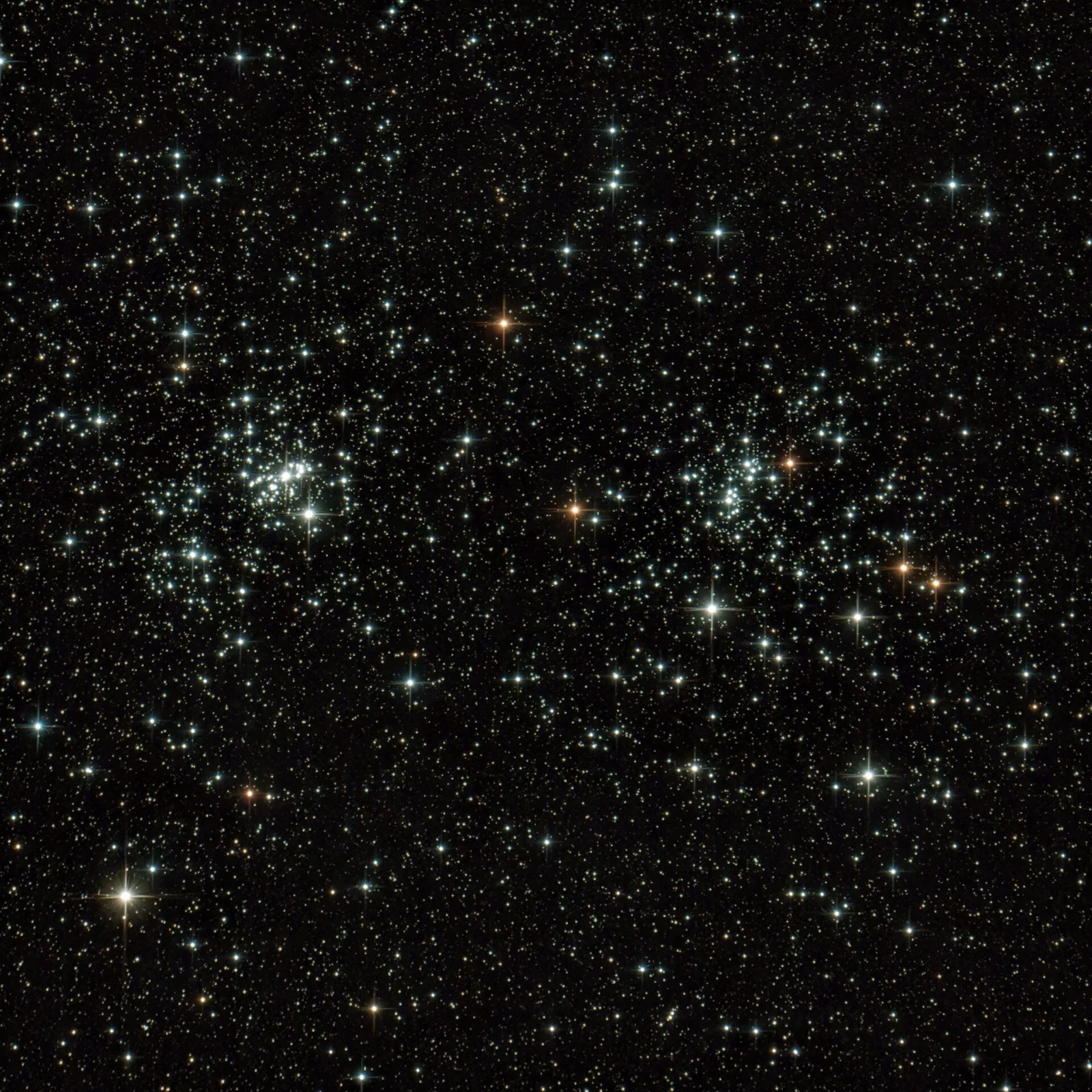
Double Cluster is an open star cluster. A family of young stars born together from the same cloud of gas.
Why the Double Cluster is interesting
What you see: The two knots are two separate star clusters, NGC 869 and NGC 884. Each holds more than 300 blue-white supergiant stars, and a few red supergiants glow orange among them. en.wikipedia.org
How it formed: Both clusters are young, about 14 million years old, while the Pleiades are about 75 to 150 million. They form the core of Perseus OB1, a loose group of young, hot stars. en.wikipedia.org
To scale: The two clusters look side by side, but they are a few hundred light-years apart in space, so their light needs a few hundred years to cross the gap. en.wikipedia.org
Three things to know
- The Double Cluster is two star clusters side by side, and both can be seen without a telescope.
- Its stars are only about 14 million years old, much younger than the stars of the Pleiades.
- Each cluster has more than 300 blue-white supergiant stars.
12 more fun facts
- Both clusters are moving toward us, at about 38 to 39 km (about 24 miles) per second. en.wikipedia.org
- The two clusters sit inside a wide halo of stars, and the whole family adds up to at least 20,000 times the mass of the Sun. en.wikipedia.org
- Many of its young supergiant stars shine many thousands of times brighter than the Sun. earthsky.org
- Chi Persei, the eastern cluster, holds five red supergiant stars that slowly change in brightness, glowing orange among the blue-white crowd. en.wikipedia.org
- The Double Cluster lies in the Perseus Arm of the Milky Way, the next spiral arm out from ours, so we look across our own Orion Arm to see it. earthsky.org
- Although it is bright enough to see without a telescope, the Double Cluster is not in Charles Messier's famous catalog. earthsky.org
- The Perseid meteors, which peak around August 12 or 13 each year, seem to fly out of a spot in the sky close to the Double Cluster. en.wikipedia.org
- From most northern mid-latitudes the Double Cluster never sets, but from south of about 30 degrees south, including most of Australia and South Africa, it never rises. en.wikipedia.org
- The two clusters look side by side, but they are a few hundred light-years apart in space. en.wikipedia.org
- William Herschel was the first to recognize, in the early 1800s, that this fuzzy patch is really two separate star clusters. en.wikipedia.org
- The western cluster, NGC 869, has about 4,700 times the mass of the Sun, while its eastern partner, NGC 884, has about 3,700. en.wikipedia.org
- The pair forms the heart of Perseus OB1, a large, loose group of young, hot stars spread across this part of the sky. en.wikipedia.org
In the game these unlock one by one as you keep photographing the Double Cluster.
At a glance
- Type
- Open star cluster
- Catalog
- NGC 869 and NGC 884
- Constellation
- Perseus
- Distance
- about 7,500 light-years (7,460 and 7,640)
- Brightness
- magnitude 3.7
- Size in our sky
- about 1 degree for the pair (each cluster about 18 arcminutes)
- Discovered
- Known since ancient times; Hipparchus catalogued it around 130 BCE
- Position (J2000)
- RA 2h 20m, Dec +57.1°
Looking back in time
The light in this photo left the Double Cluster about 7,500 years ago, when nobody could write yet (writing began about 5,200 years ago) and the first farming villages were growing.
How to see it yourself
Visible to the naked eye from a dark site. Binoculars show it well, and a small telescope shows more detail.
Finding it: It lies between the W of Cassiopeia and the constellation Perseus. Start at Gamma Cassiopeiae, the middle star of the W, draw a line through Delta Cassiopeiae and keep going east until two little knots of stars appear.
When to look: Autumn and winter evenings are best. From mid-northern latitudes it is circumpolar, so it is above the horizon all night, every night, but it is hardest to see in late spring and summer evenings when it rides low.
What you will see: From suburban skies it is a faint smudge of light, and from a dark country sky it is easy to see. Binoculars split it into two glittering groups of mostly blue-white stars with a few orange ones; NGC 869, the one nearer Cassiopeia, looks more tightly packed. A small telescope at low power shows both clusters together and looks superb.
Easy to confuse with:
- Messier 34: M34, also in Perseus, is a single, looser cluster farther west toward Algol, while the Double Cluster shows two rich knots of stars side by side.
Best months: November is when it is highest around midnight. About two months later it is highest in the early evening, at around 8 to 9 PM.
Where on Earth: easy from the Northern Hemisphere. South of latitude 23°S it never climbs more than 10° above the horizon. From 33°N and farther north it never sets.
This month: one of the best evening targets in the night sky in November 2026.
How it is photographed: long exposures through filters, then the frames are stacked, stretched and combined into color.
Name and story
The name: The pair is called the Double Cluster because a telescope shows two clusters side by side, NGC 869 and NGC 884. Johann Bayer gave them the letters h and chi Persei in his 1603 star atlas, as if they were single stars. Hipparchus had already recorded the patch around 130 BCE, and it is number 14 in the Caldwell catalog.
People and history: In Greek sky lore the Double Cluster marks the jeweled handle of the sword held by the hero Perseus. Bedouin Arabs saw it instead as the tail of a small fish, and it appears in the illustrations of al-Sufi's Book of Fixed Stars.
Test yourself
After every photo of the Double Cluster the game asks one of these. A right answer earns sky points for your observatory.
How old are the stars of the Double Cluster?
- About 14 million years (the answer)
- About 5,000 years
- About 13 billion years
That is young for stars, which is why so many are still hot blue-white supergiants. The Pleiades, another young cluster, are about 75 to 150 million years old. en.wikipedia.org
Who first saw that this fuzzy patch is really two clusters?
- Edwin Hubble
- William Herschel (the answer)
- Charles Messier
Herschel recognized it in the early 1800s. Hipparchus had recorded it as one patch around 130 BCE, and Bayer even lettered it like single stars, h and chi Persei. en.wikipedia.org
Point a telescope at the Double Cluster in the game: capture it in real time, then develop the frames like an astrophotographer.
Point a telescope at the Double ClusterMore star clusters
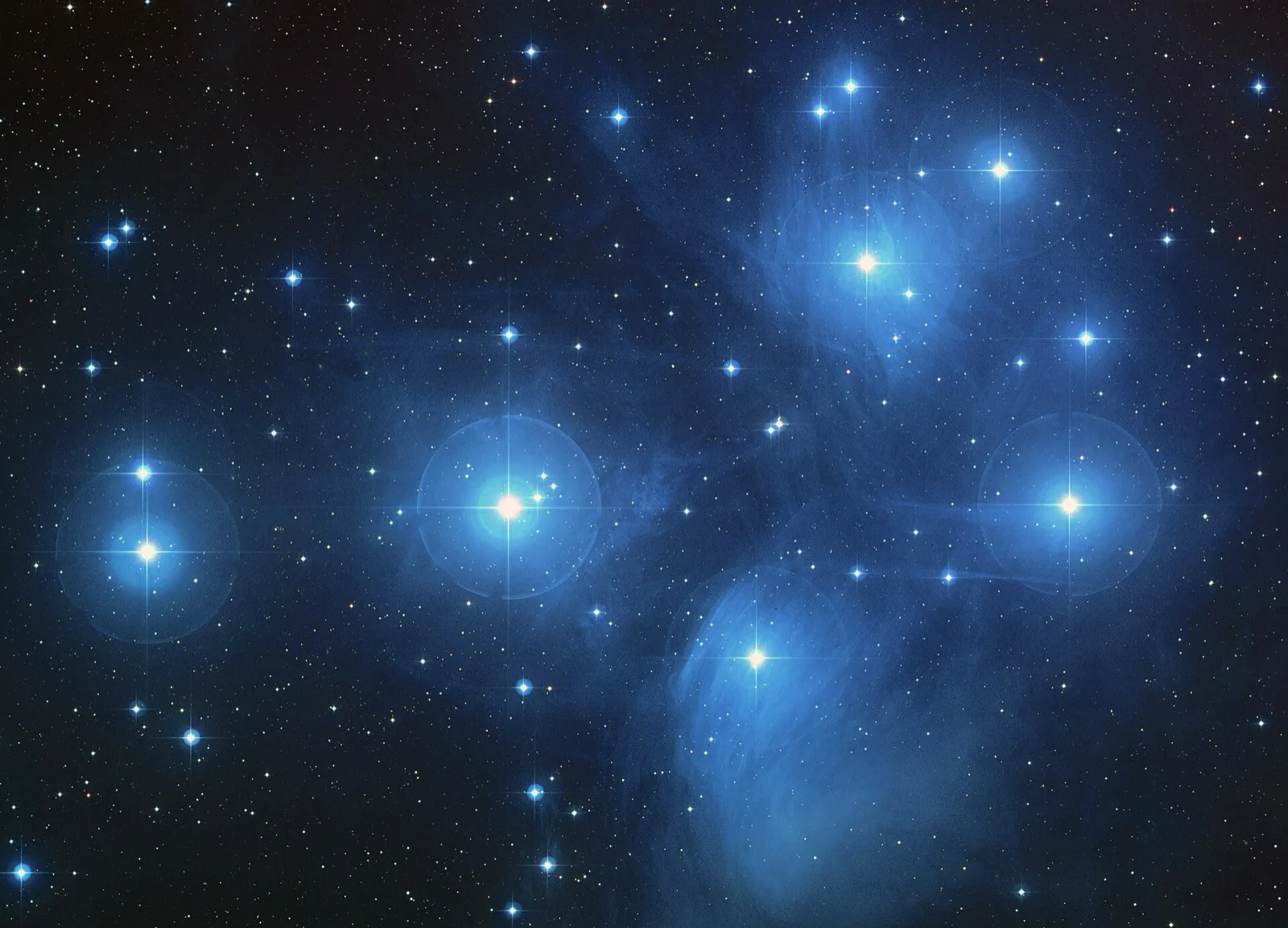 The PleiadesM45 · open star cluster
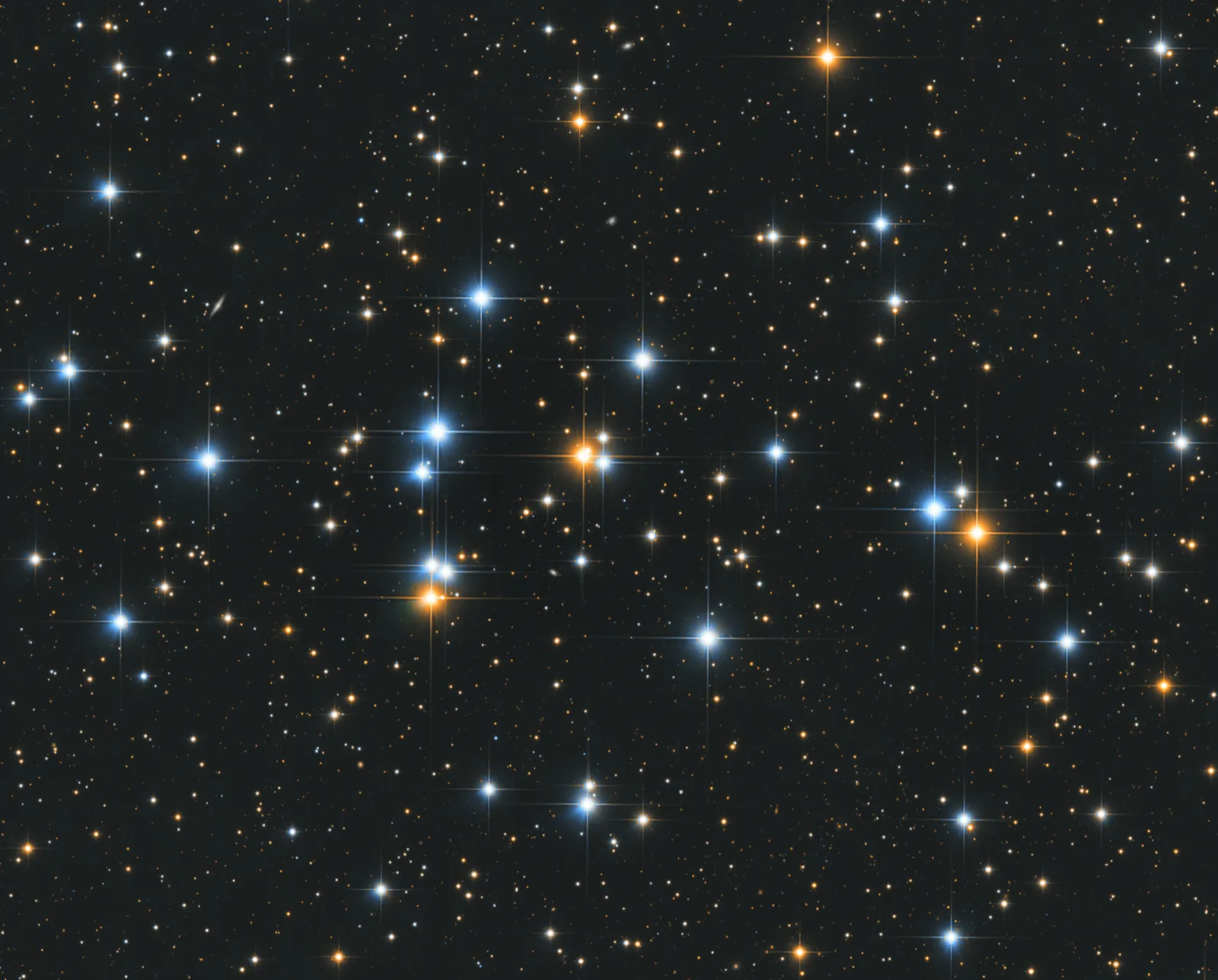 Beehive ClusterM44 · open star cluster
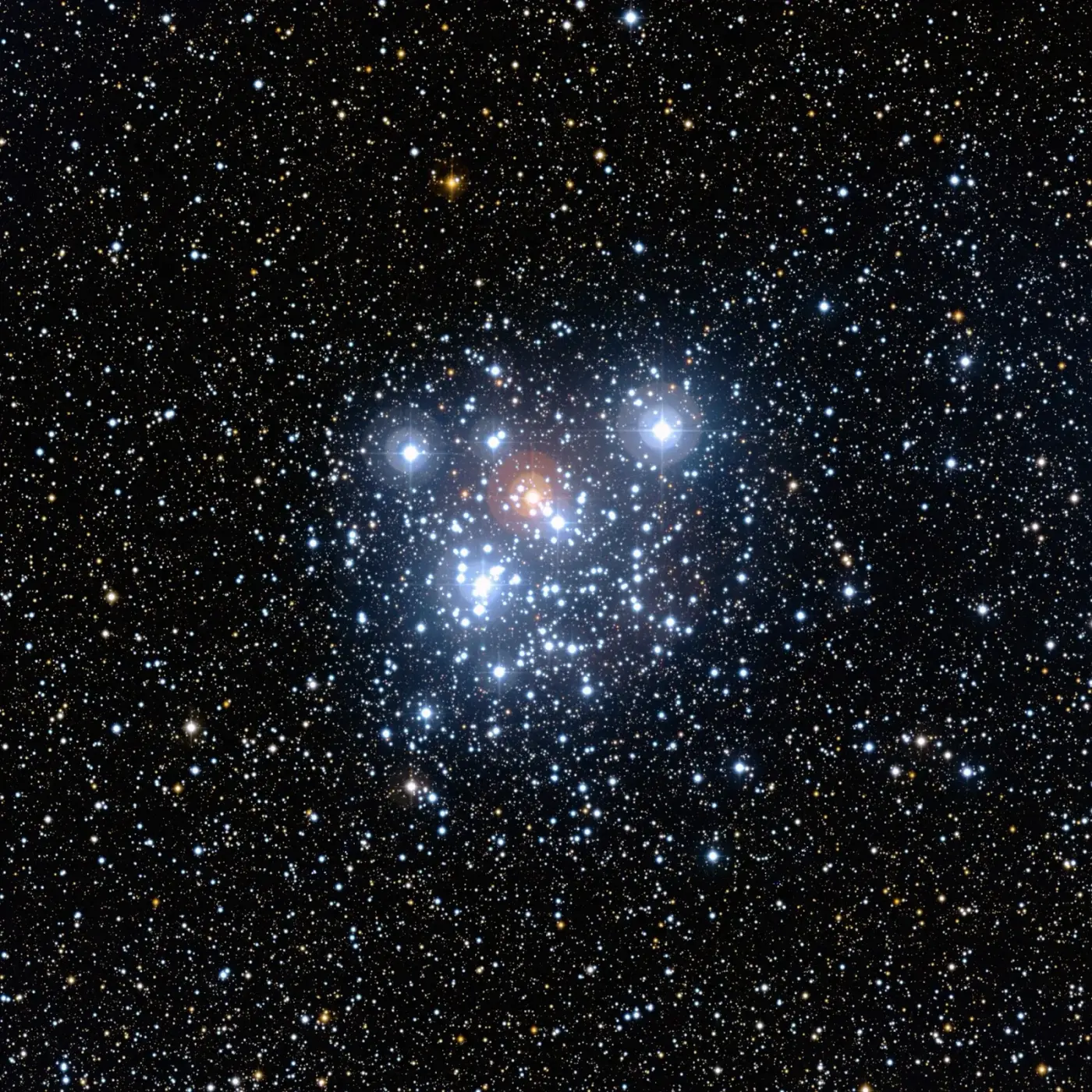 Jewel BoxNGC 4755 · open star cluster
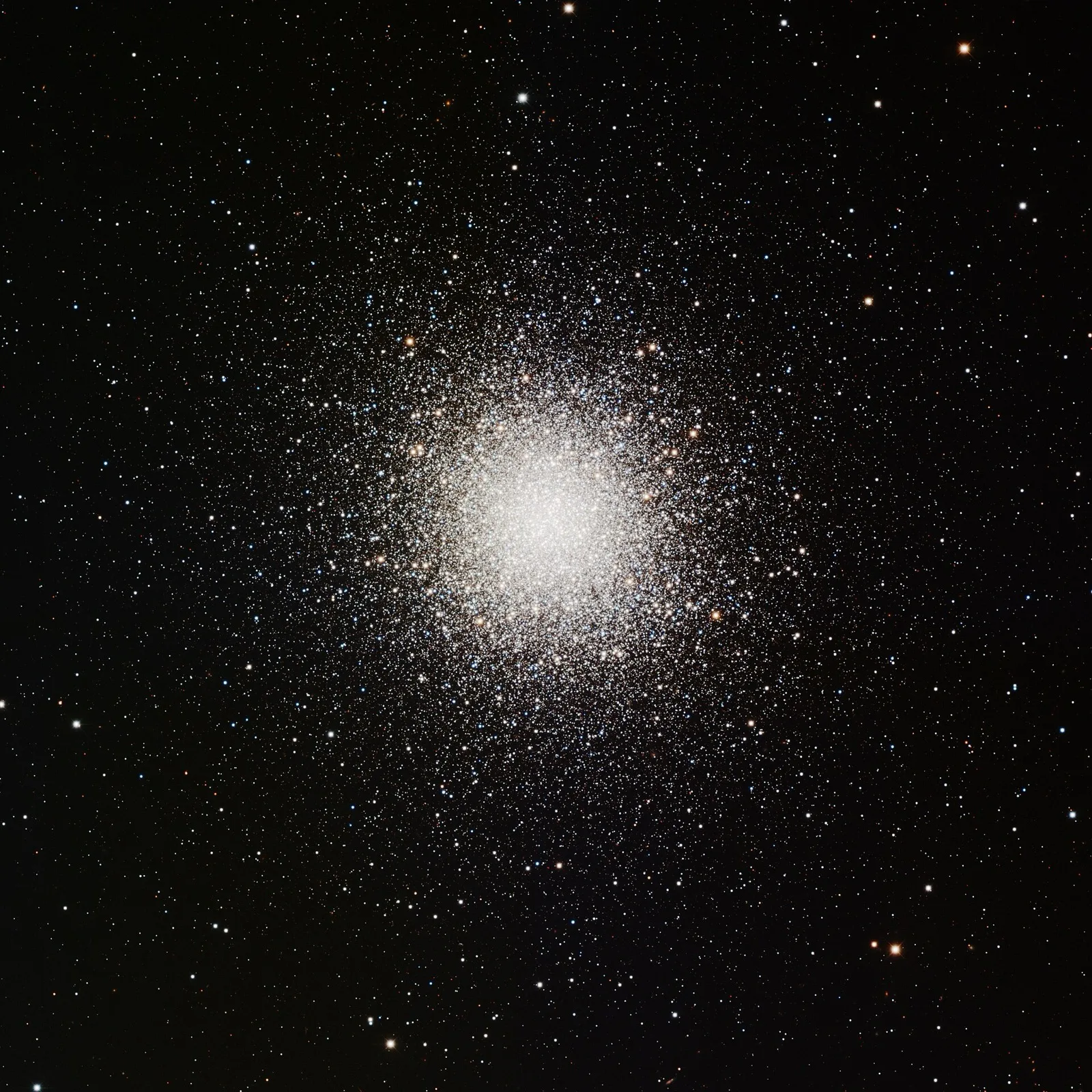 Hercules ClusterM13 · globular cluster
Sources
- en.wikipedia.org
- en.wikipedia.org
- en.wikipedia.org
- earthsky.org
- astronomy.com
- Positions: astronomy-engine (Don Cross).