 SKY
Sky catalog › Galaxies
Sculptor Galaxy
NGC 253 · A galaxy in Sculptor
What is it?
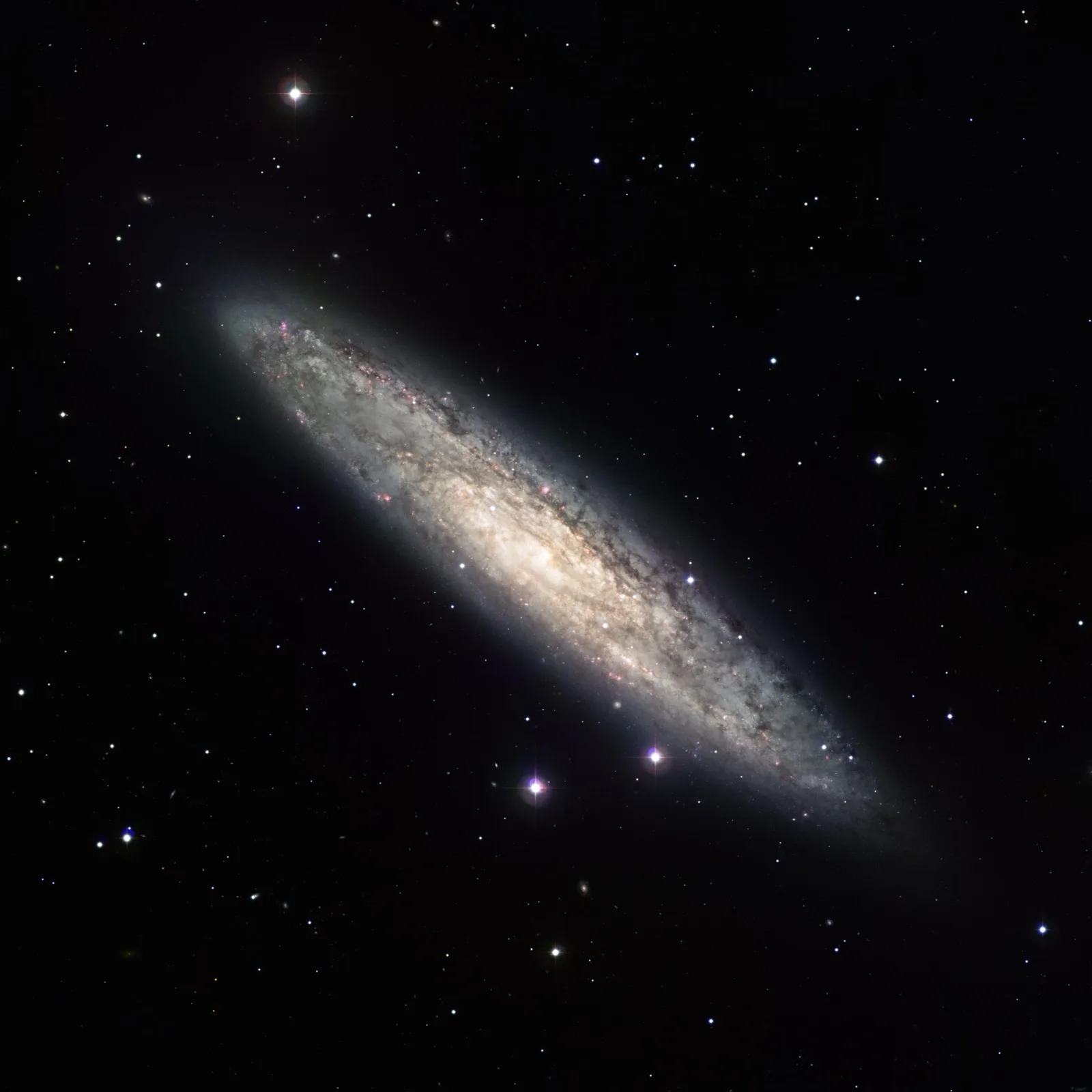
Sculptor Galaxy is a galaxy. A whole island of millions to trillions of stars, far outside our Milky Way.
Why the Sculptor Galaxy is interesting
What you see: The long oval is a spiral disk seen tilted 78 degrees from face-on, so it looks about four times longer than it is wide. astronomy.com
How it formed: Its burst of star birth may have been set off by a collision with a small, gas-rich galaxy about 200 million years ago. en.wikipedia.org
To scale: Its core blows out nearly 10 Suns' worth of gas every year, at up to almost 1,000,000 km/h (620,000 mph). eso.org
Three things to know
- The Sculptor Galaxy is a starburst galaxy, which means it is making new stars unusually fast right now.
- Caroline Herschel discovered it in 1783 while she was searching the sky for comets.
- It is the brightest galaxy in the Sculptor Group, one of the nearest groups of galaxies to the Milky Way.
12 more fun facts
- The Sculptor Galaxy blows cool gas out of its core at speeds between 150,000 and almost 1,000,000 km/h (about 93,000 to 620,000 mph), nearly 10 Suns' worth of gas every year. eso.org
- Its starburst is blowing away gas so fast that, at this rate, the galaxy could run out of star-making fuel in as little as 60 million years. eso.org
- In 2025 ESO's Very Large Telescope mapped it in thousands of colors at once, stitching together more than 100 exposures from over 50 hours of observing. eso.org
- That 2025 map turned up about 500 planetary nebulae, the glowing shells of dying Sun-like stars. Beyond our close neighbors, astronomers usually find fewer than 100 in a galaxy. eso.org
- It lies only about 2 degrees from the South Galactic Pole, so we see it far away from the crowded, dusty plane of our Milky Way. astronomy.com
- Its central black hole is estimated at about 5 million times the mass of the Sun, slightly heavier than the one at the center of our Milky Way. en.wikipedia.org
- Its burst of star birth may have been set off by a collision with a small, gas-rich galaxy about 200 million years ago. en.wikipedia.org
- A star cluster buried in the dust at its core holds about 14 million Suns' worth of mass, yet it is only around 5.7 million years old. en.wikipedia.org
- Its only known supernova, SN 1940E, was found by Fritz Zwicky on November 22, 1940. en.wikipedia.org
- About a dozen faint dwarf galaxies circling it were discovered between 2021 and 2024, adding to the 12 that were known by 2020. en.wikipedia.org
- We see its disk tilted 78 degrees from face-on, so it looks like a long, narrow oval about four times longer than it is wide. astronomy.com
- Some observers say they have seen it with the naked eye under exceptionally dark, clear skies. en.wikipedia.org
In the game these unlock one by one as you keep photographing the Sculptor Galaxy.
At a glance
- Type
- Galaxy
- Catalog
- NGC 253
- Constellation
- Sculptor
- Distance
- about 10 to 11.4 million light-years (estimates differ)
- Brightness
- magnitude 8
- Size in our sky
- 27.5 x 6.8 arcminutes
- Discovered
- Caroline Herschel, 1783
- Position (J2000)
- RA 0h 48m, Dec -25.3°
Looking back in time
The light in this photo left the Sculptor Galaxy 10 million to 11.4 million years ago, when there were no humans at all: apes lived in the forests of Africa, Europe and Asia.
How to see it yourself
Needs a telescope and a dark sky. Photos show far more than the eye can see.
Finding it: Sculptor has no bright stars. Start at Diphda (Beta Ceti) in Cetus the Whale, east of the bright star Fomalhaut, and sweep about 7 degrees south. The globular cluster NGC 288 sits 1.8 degrees southeast of the galaxy.
When to look: Autumn evenings, with November a peak month. From mid-northern latitudes it stays low in the south, so you need a clear southern horizon and a dark site. From the Southern Hemisphere it is high and easy from September to March.
What you will see: Usually not a naked-eye object. Binoculars show a pale, elongated glow at about magnitude 8. A small telescope adds a slightly brighter center, and larger scopes reveal a mottled, grainy look from its dust clouds.
Easy to confuse with:
- NGC 288: NGC 288 is a round, fuzzy globular star cluster 1.8 degrees away, while NGC 253 is a long, thin oval streak.
- NGC 247: NGC 247 is another galaxy of the same group in nearby Cetus, but it is much fainter and harder to see.
Best months: October is when it is highest around midnight. About two months later it is highest in the early evening, at around 8 to 9 PM.
Where on Earth: best from the Southern Hemisphere. North of latitude 55°N it never climbs more than 10° above the horizon.
This month: one of the best evening targets in the night sky in November 2026.
How it is photographed: long exposures through filters, then the frames are stacked, stretched and combined into color.
Name and story
The name: It is named for its constellation, Sculptor, and is also nicknamed the Silver Coin or Silver Dollar Galaxy. Caroline Herschel discovered it in 1783, and it later became NGC 253 and number 65 in Patrick Moore's Caldwell catalog.
Record: Among spiral galaxies, it is one of the easiest to see after the Andromeda Galaxy, and binoculars are enough to pick it up.
Explored by: In 2025 astronomers used the MUSE instrument on ESO's Very Large Telescope in Chile to map an area of the galaxy about 65,000 light-years wide in thousands of colors. Lead researcher Enrico Congiu called it a "sweet spot": close enough to see its building blocks in detail, yet big enough to study as a whole.
Test yourself
After every photo of the Sculptor Galaxy the game asks one of these. A right answer earns sky points for your observatory.
At its current pace, how soon could Sculptor run out of gas to make stars?
- In as little as 60 million years (the answer)
- In about 60 billion years
- In about 60 years
Its starburst blows gas out of the galaxy so fast that the fuel for new stars is draining away, on a timescale short for a galaxy. eso.org
What was Caroline Herschel hunting for when she found it in 1783?
- New planets
- Comets (the answer)
- Moons of Saturn
She was searching the sky for comets in 1783 and came upon this galaxy instead. It is one of the easiest spirals to see after Andromeda. en.wikipedia.org
Point a telescope at the Sculptor Galaxy in the game: capture it in real time, then develop the frames like an astrophotographer.
Point a telescope at the Sculptor GalaxyMore galaxies
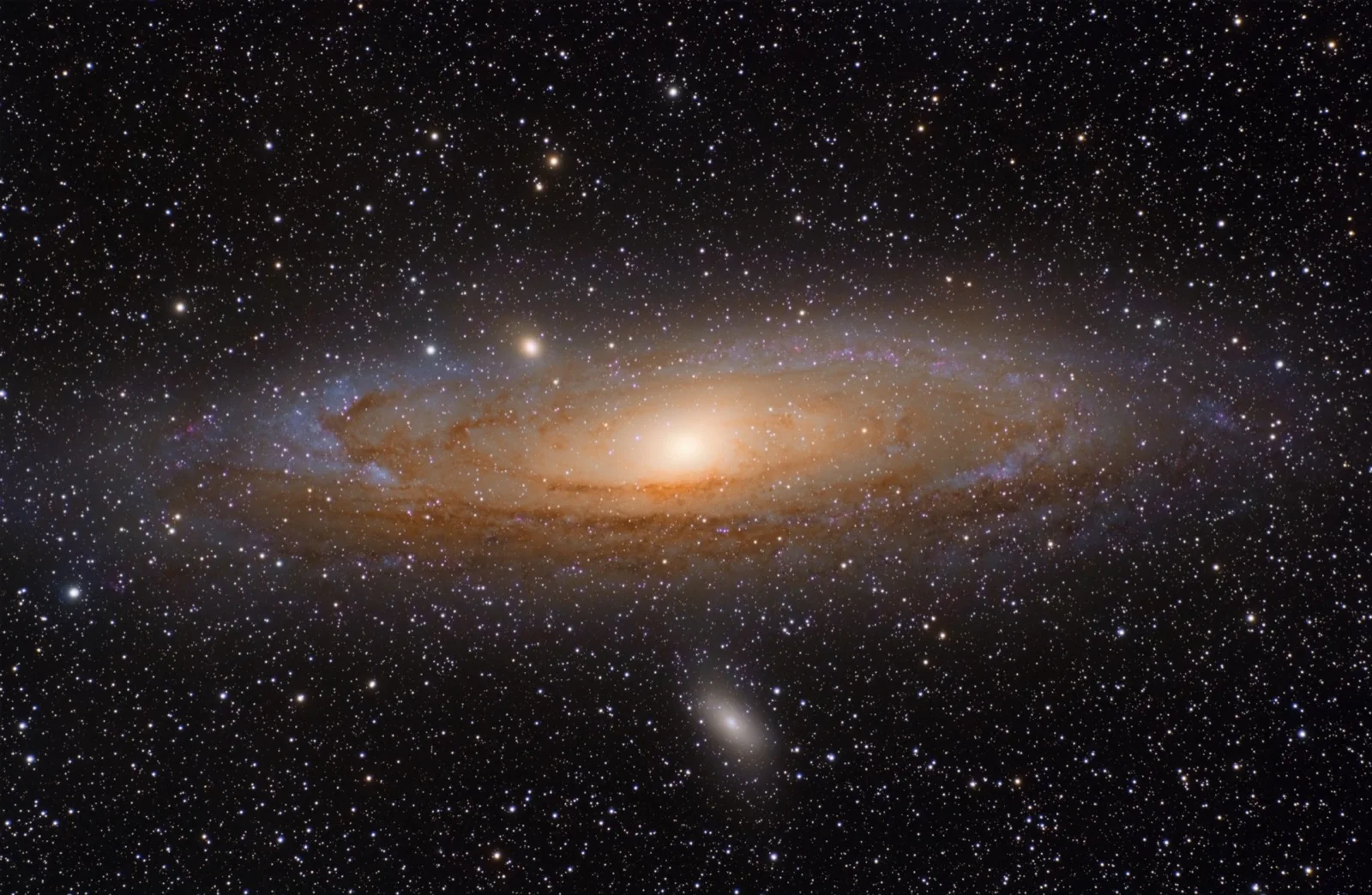 Andromeda GalaxyM31 · galaxy
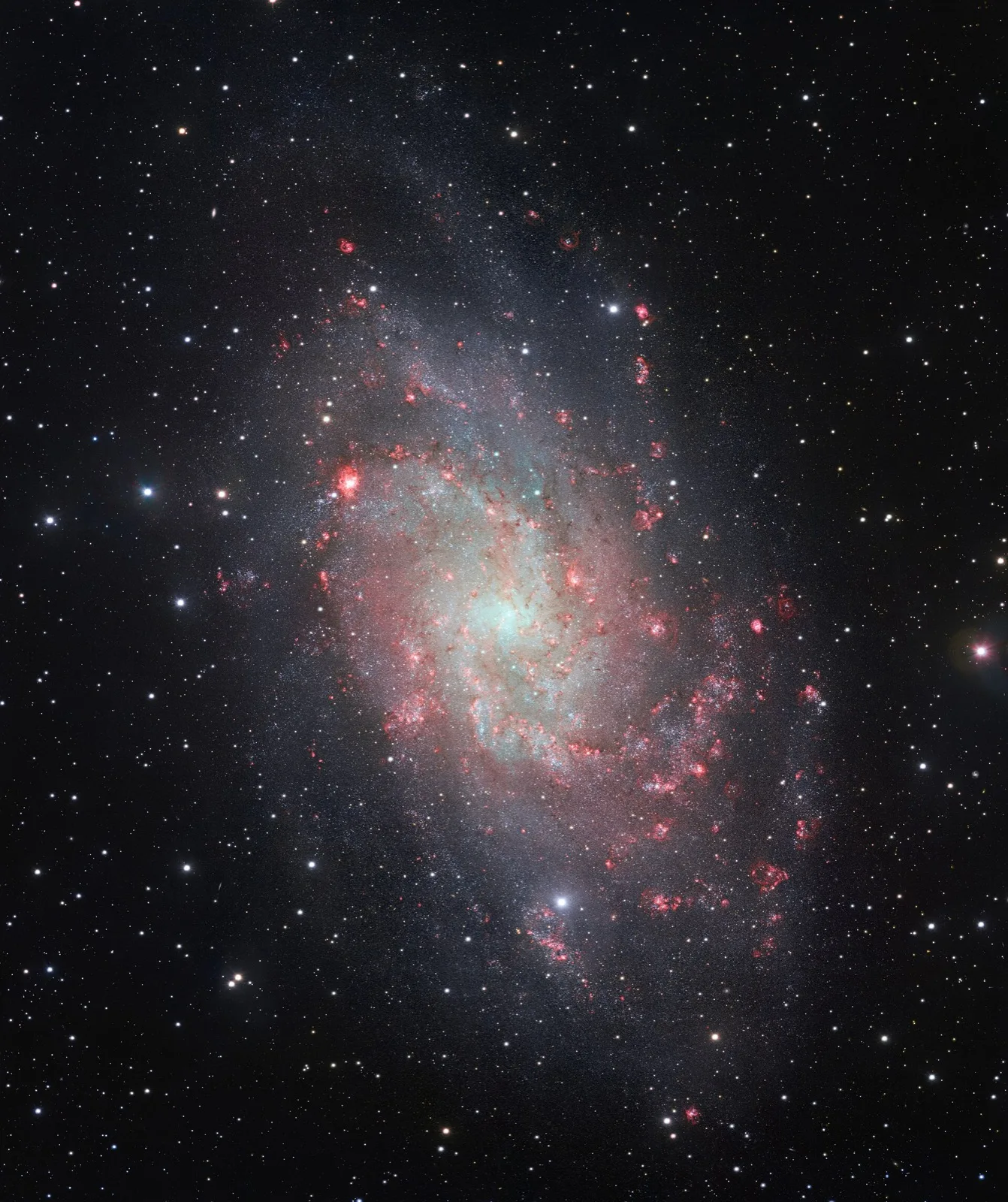 Triangulum GalaxyM33 · galaxy
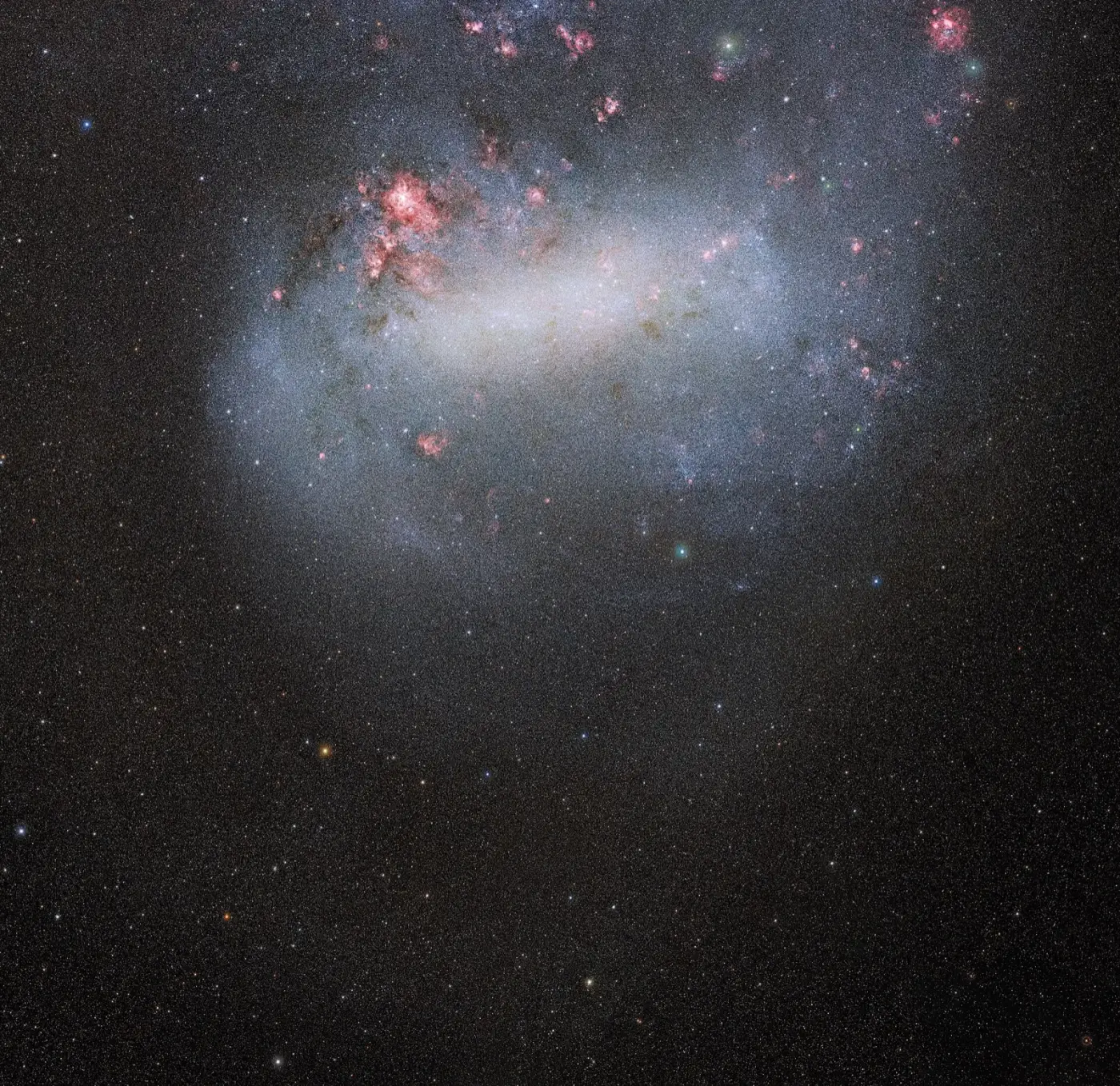 Large Magellanic CloudLMC · galaxy
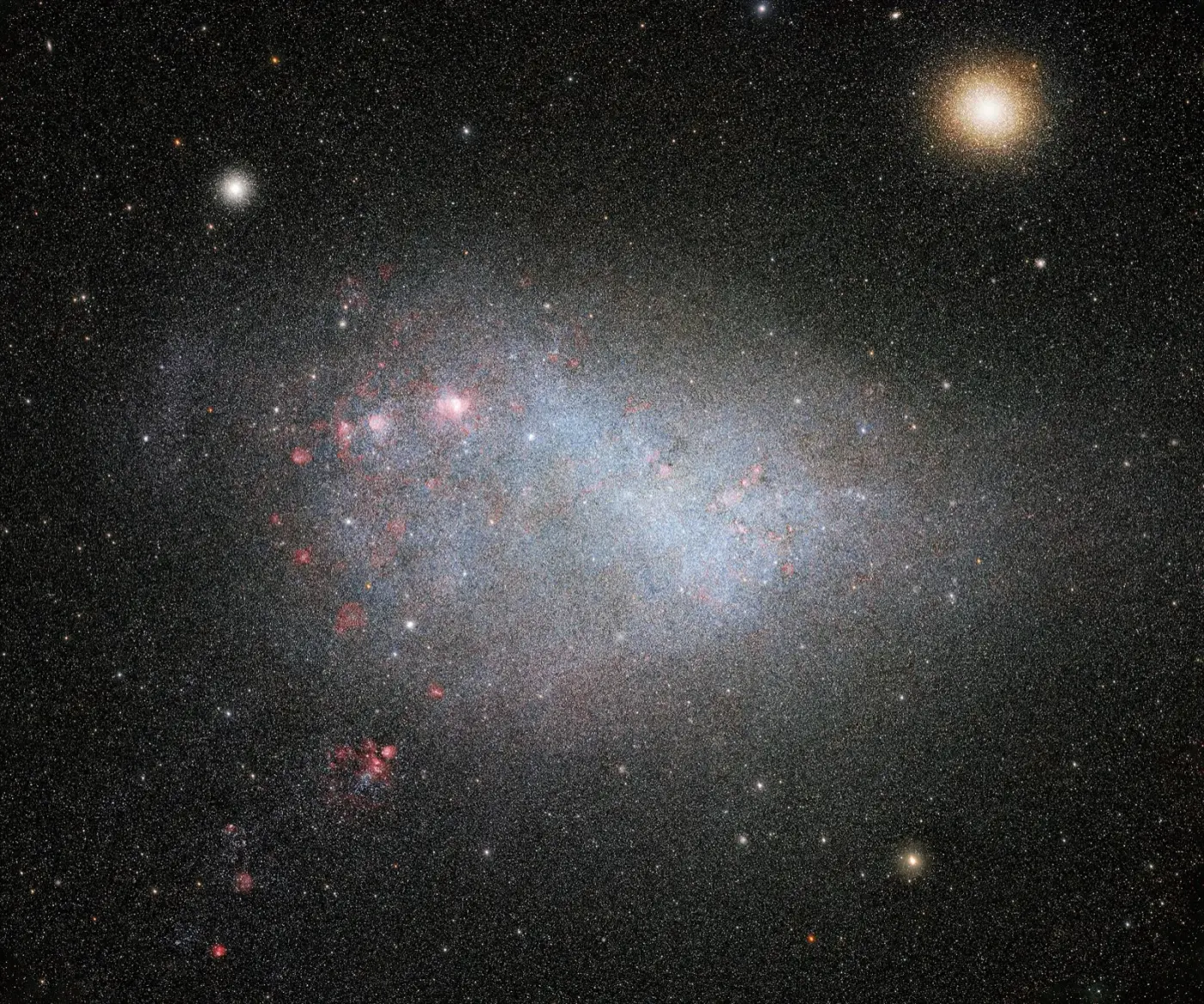 Small Magellanic CloudSMC · galaxy
Sources
- en.wikipedia.org
- science.nasa.gov
- eso.org
- eso.org
- astronomy.com
- earthsky.org
- Positions: astronomy-engine (Don Cross).