 SKY
Sky catalog › Nebulae
Owl Nebula
M97, NGC 3587 · A planetary nebula in Ursa Major
What is it?
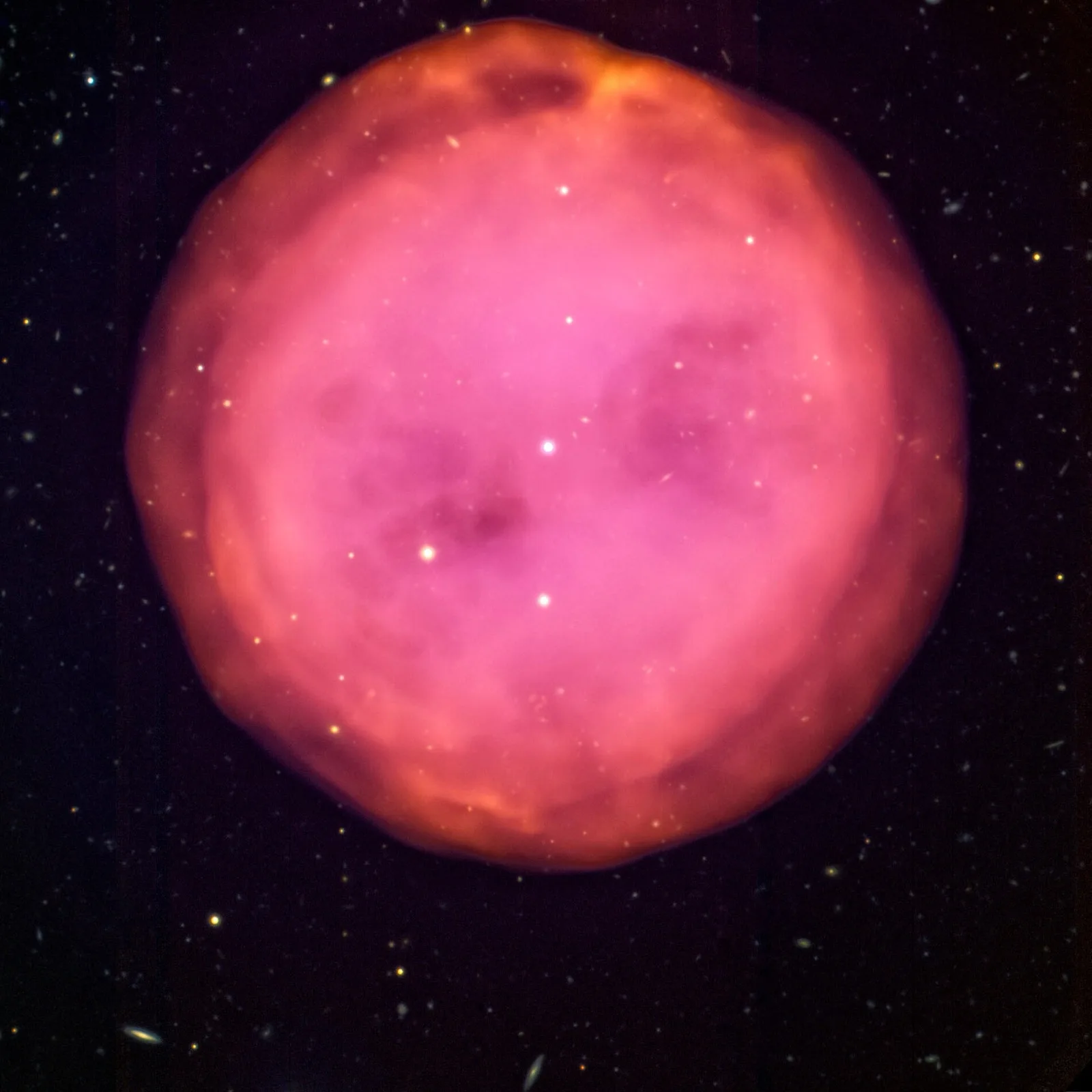
Owl Nebula is a planetary nebula. A shell of gas puffed off by a dying Sun-like star. It has nothing to do with planets: early telescopes made it look like a small planet disk.
Why the Owl Nebula is interesting
What you see: The pale round glow is gas thrown off by a dying star. The two dark owl eyes are cavities cleared out of that gas by a fast outflow. space.com
How it formed: About 8,000 years ago the central star blew off its outer gas in a stellar wind. That star, now about 123,000 kelvin, is condensing into a white dwarf. en.wikipedia.org
To scale: The Owl spans over 2 light-years, about 2,000 times the width of Neptune's orbit around the Sun. science.nasa.gov
Three things to know
- The Owl Nebula is the glowing shell of gas thrown off by a dying star, and it is about 8,000 years old.
- Two dark patches look like an owl's eyes; Lord Rosse drew it that way in 1848, and the name stuck.
- Its central star is slowly turning into a white dwarf, and its surface is about 123,000 kelvin hot.
11 more fun facts
- The Owl spans over 2 light-years, about 2,000 times the width of Neptune's orbit around the Sun. science.nasa.gov
- In 2010 a Canadian high school student, Emilie Storer, won a contest to choose a target for the Gemini North telescope in Hawaii, and she picked the Owl Nebula. space.com
- Gemini's images showed the Owl is not a simple ball of gas: the eyes are hollows carved by a fast outflow tilted 36 degrees from a cylinder-shaped outer structure. space.com
- The Owl is made of three nested shells of gas, and the outermost is about 20 to 30 percent larger than the inner one. en.wikipedia.org
- All the glowing gas in the Owl adds up to only about 0.13 times the Sun's mass, spread so thin there are fewer than 100 particles per cubic centimeter. en.wikipedia.org
- The Owl is expanding into space at about 27 to 39 km per second, roughly 60,000 to 87,000 miles per hour. en.wikipedia.org
- Each of the Owl's dark eyes is slightly less than 1 arcminute across, and the northwestern eye looks a little darker than the other. astronomy.com
- The Owl's central star holds about 55 to 60 percent of the Sun's mass, yet shines roughly 41 to 148 times as brightly as the Sun. en.wikipedia.org
- When Messier added it to his catalog on March 24, 1781, he passed on Pierre Mechain's warning that it was difficult to see. universetoday.com
- In 1844 Admiral William H. Smyth classified the Owl as a planetary nebula. en.wikipedia.org
- A NASA picture of the day from 2009 was built from narrow-band filter images with a total of 24 hours of exposure time. science.nasa.gov
In the game these unlock one by one as you keep photographing the Owl Nebula.
At a glance
- Type
- Planetary nebula
- Catalog
- M97, NGC 3587
- Constellation
- Ursa Major
- Distance
- about 2,000 to 2,800 light-years (estimates differ)
- Brightness
- magnitude 9.9
- Size in our sky
- 3.4 x 3.3 arcminutes
- Discovered
- Pierre Méchain, February 16, 1781
- Position (J2000)
- RA 11h 15m, Dec +55.0°
Looking back in time
The light in this photo left the Owl Nebula 2,000 to 2,800 years ago, when the Greek and Roman world watched this same sky; Greek thinkers worked out from the round shadow on the Moon during eclipses that the Earth is a ball.
How to see it yourself
Needs a telescope and a dark sky. Photos show far more than the eye can see.
Finding it: Find Merak, the star at the bottom outer corner of the Big Dipper's bowl. The Owl lies about 2.3 degrees southeast of Merak, toward Phecda (Gamma Ursae Majoris), about one third of the way between the two stars.
When to look: Best on spring evenings from mid-northern latitudes. NASA says its neighbor M108, just under the bowl of the Big Dipper, is best in April and can be seen all year from the Northern Hemisphere.
What you will see: Not visible to the naked eye. Big binoculars under a very dark sky may show a faint round glow. A small telescope shows a pale round disk under dark skies, and an OIII filter at about 100x helps; the two dark eyes usually need 10 inches or more.
Easy to confuse with:
- Messier 108 (Surfboard Galaxy): M108 sits nearby between Merak and the Owl, but it is a thin, elongated streak of a galaxy, while the Owl is a round disk.
Best months: March is when it is highest around midnight. About two months later it is highest in the early evening, at around 8 to 9 PM.
Where on Earth: easy from the Northern Hemisphere. South of latitude 25°S it never climbs more than 10° above the horizon. From 35°N and farther north it never sets.
How it is photographed: long exposures through filters, many hours in total, which is why the game sends it to a big observatory mirror. then the frames are stacked, stretched and combined into color.
Name and story
The name: Pierre Mechain discovered it on February 16, 1781, and Charles Messier listed it as number 97. In 1848 William Parsons, the third Earl of Rosse, observed it in Ireland and drew it with two dark patches like an owl's eyes, which gave it its name.
Explored by: In 2010 the Gemini North telescope on Mauna Kea in Hawaii photographed the Owl with its GMOS instrument after a Canadian high school student chose it in a contest. The images showed that the Owl is a bipolar nebula with a cylinder-like outer structure, not the simple ball of gas astronomers had pictured.
Test yourself
After every photo of the Owl Nebula the game asks one of these. A right answer earns sky points for your observatory.
What are the two dark eyes of the Owl Nebula?
- Two hidden black holes
- Cavities in the glowing gas (the answer)
- Two dark planets
A fast outflow of gas from the dying star cleared out two hollow spaces. With less glowing gas there, those patches look dark, like an owl's eyes. space.com
In 2010, who picked the Owl as a target for the Gemini North telescope?
- A U.S. president
- A NASA astronaut
- A high school student (the answer)
Emilie Storer, a high school student from Quebec, won a contest open to students across Canada. The images showed the Owl is not a simple ball of gas. space.com
Point a telescope at the Owl Nebula in the game: capture it in real time, then develop the frames like an astrophotographer.
Point a telescope at the Owl NebulaMore nebulae
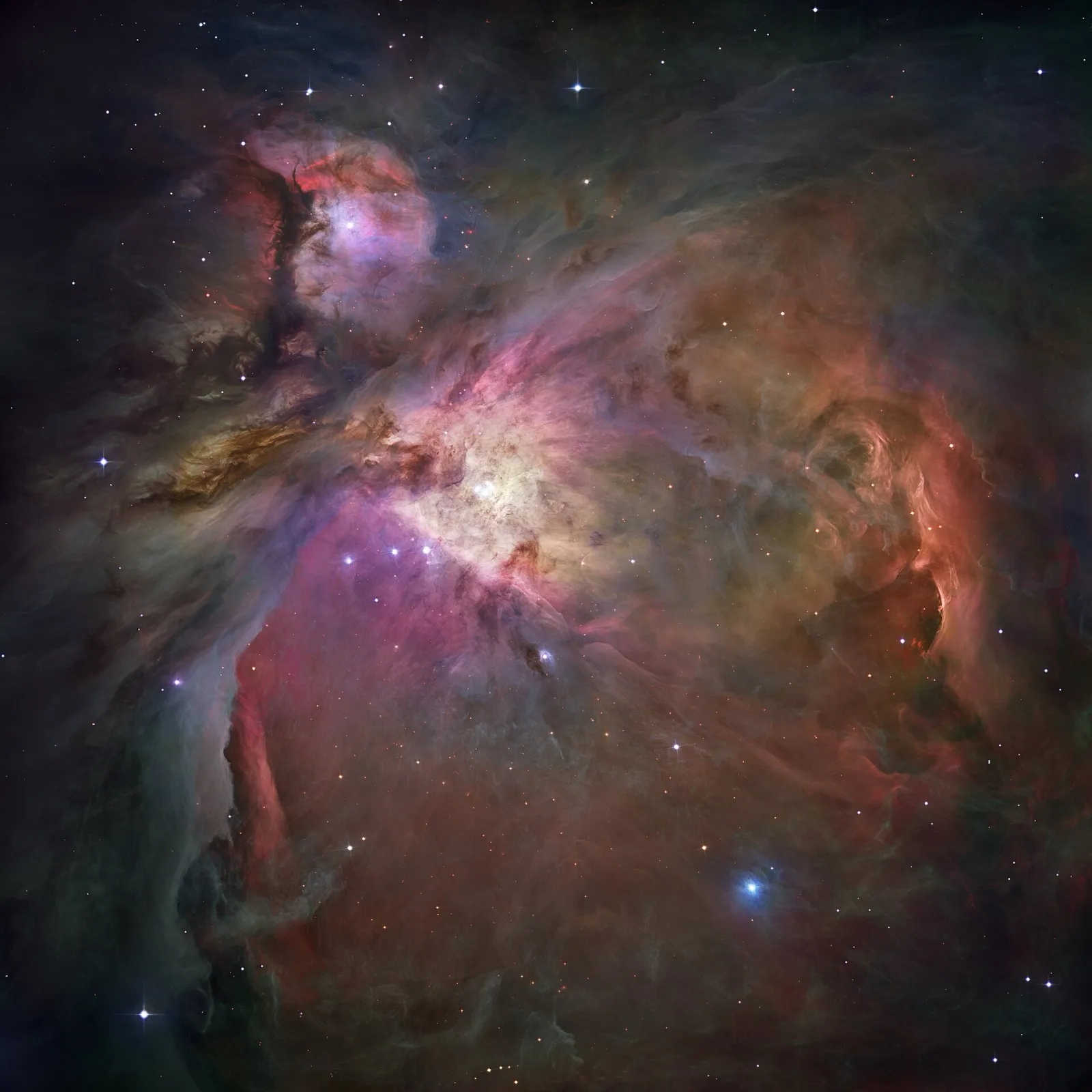 Orion NebulaM42 · star-forming nebula
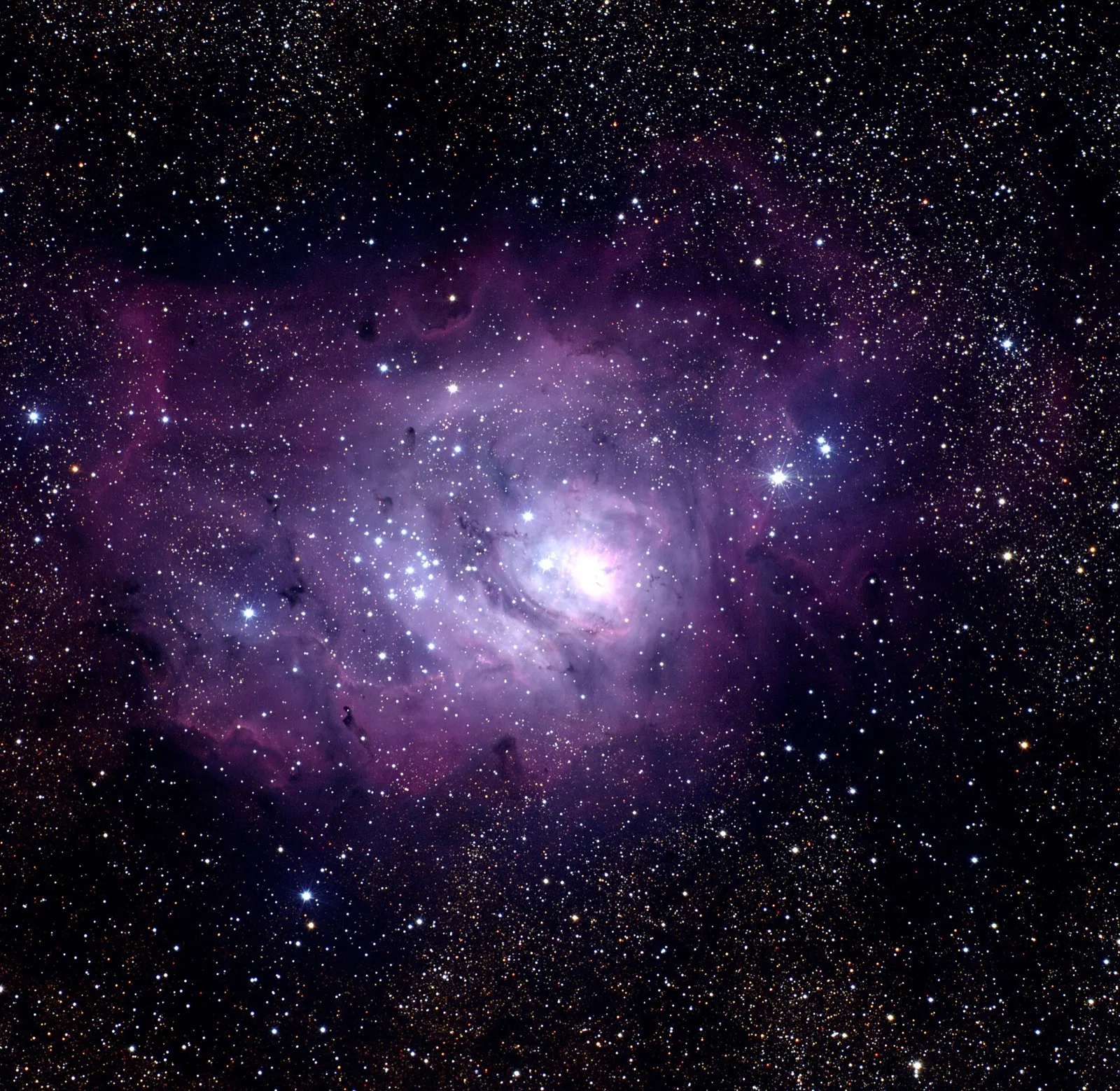 Lagoon NebulaM8 · star-forming nebula
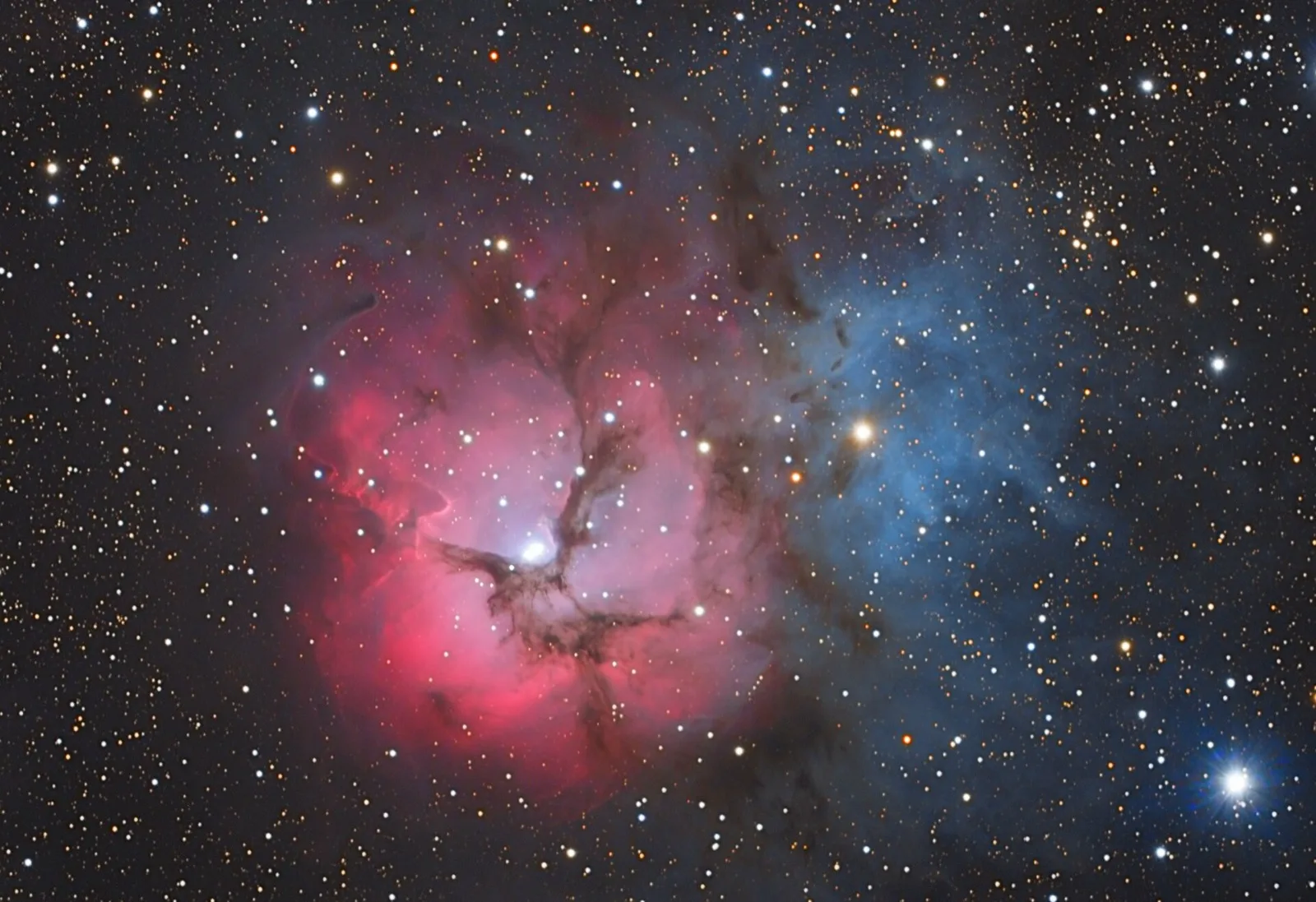 Trifid NebulaM20 · star-forming nebula
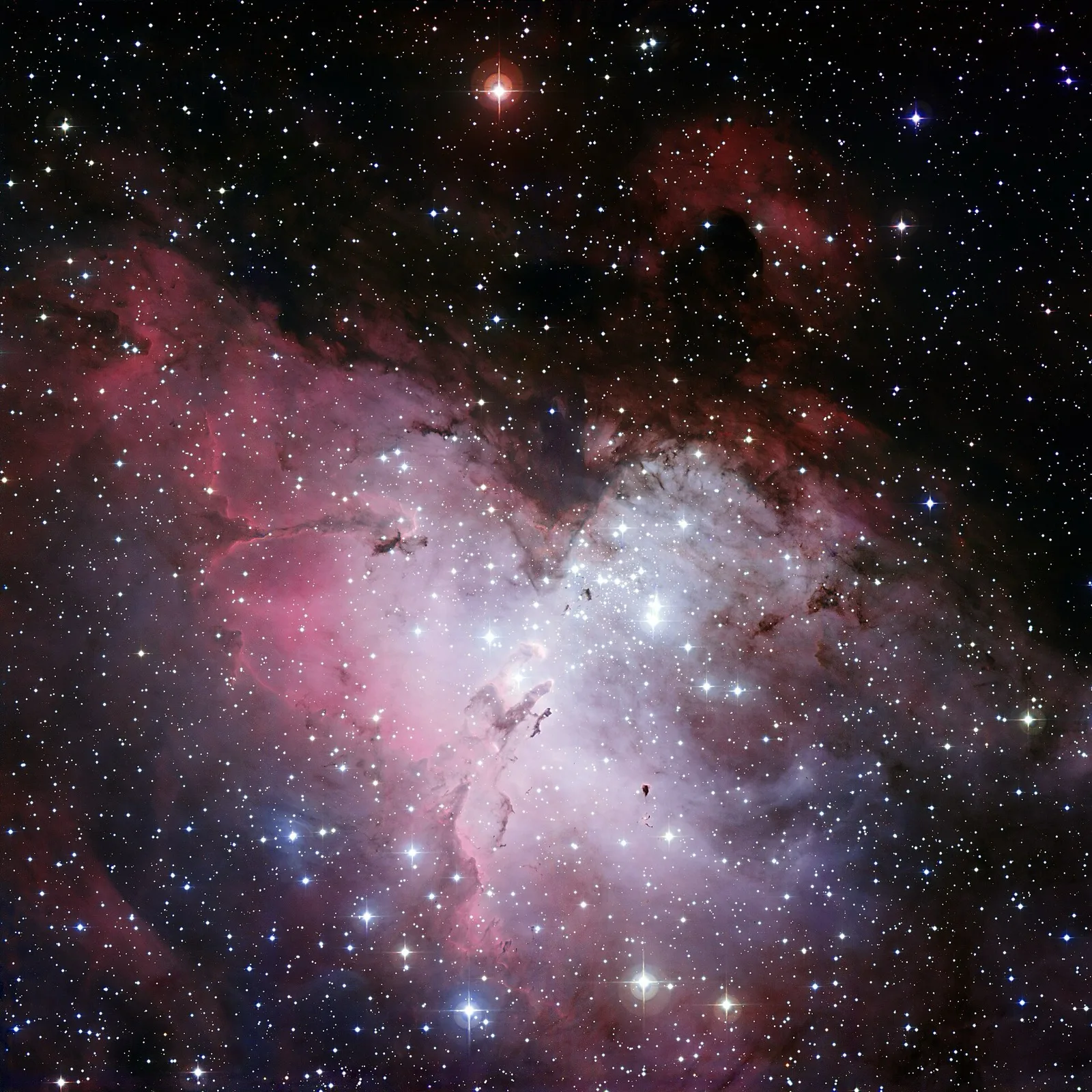 Eagle NebulaM16 · star-forming nebula
Sources
- en.wikipedia.org
- messier.seds.org
- science.nasa.gov
- space.com
- astronomy.com
- universetoday.com
- science.nasa.gov
- Positions: astronomy-engine (Don Cross).