 SKY
Sky catalog › Star clusters
Messier 41
M41, NGC 2287 · An open star cluster in Canis Major
What is it?
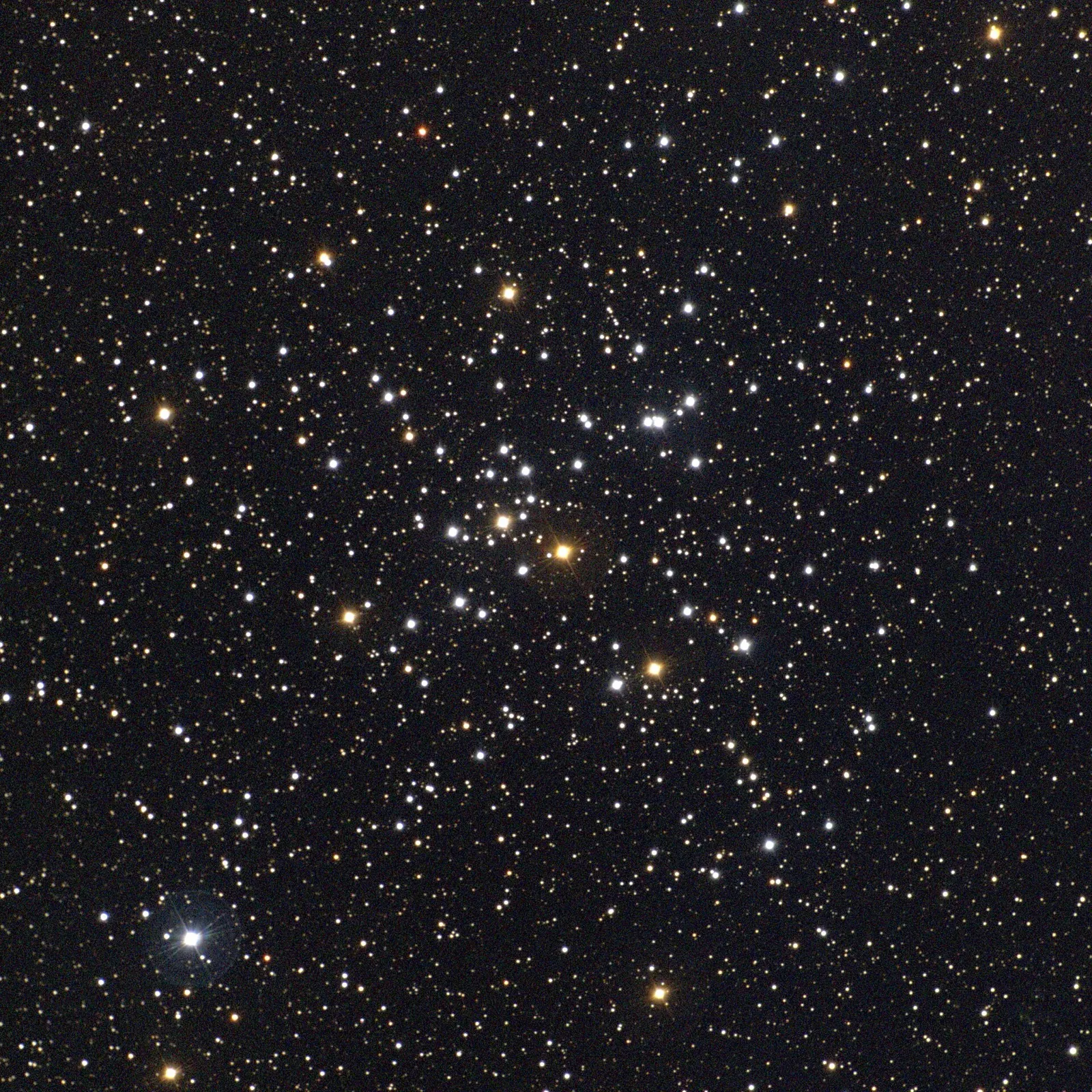
Messier 41 is an open star cluster. A family of young stars born together from the same cloud of gas.
Why Messier 41 is interesting
What you see: The spray of dots is about 100 stars born together, including several red giants and white dwarfs. The brightest star, a red giant, sits near the center. en.wikipedia.org
How it formed: Its stars formed together about 190 million years ago. The cluster will not last: astronomers predict it will fall apart after a total lifespan of about 500 million years. en.wikipedia.org
To scale: M41 is about 25 to 26 light-years across, so light needs about 25 years to cross it. en.wikipedia.org
Three things to know
- M41 sits about 4 degrees south of Sirius, the brightest star in the night sky, so it is easy to find with binoculars.
- It holds about 100 stars, including several orange-red giants; the brightest, near the center, gives off about 700 times more light than the Sun.
- The Greek philosopher Aristotle may have seen it around 325 BC, which would make it the faintest object recorded in ancient times, but that is not certain.
11 more fun facts
- M41, Sirius and the star Nu2 Canis Majoris form a nearly equal-sided triangle that fits in a single binocular view. en.wikipedia.org
- One orange giant near the middle of M41, HIP 32406, is listed at about 1,500 light-years away, much closer than the cluster itself, so it may simply be a star in front of it. en.wikipedia.org
- M41 is moving away from us at about 23 km (14 miles) per second. en.wikipedia.org
- The cluster is not expected to last: astronomers estimate its total lifespan at about 500 million years before its stars scatter. en.wikipedia.org
- John Flamsteed found M41 again on his own on February 16, 1702, not knowing Hodierna had recorded it decades earlier. universetoday.com
- At least two white dwarfs, the leftover cores of dead stars, have been found in M41. universetoday.com
- M41 is about 25 to 26 light-years across. en.wikipedia.org
- Age estimates for M41 range from about 190 to 240 million years, so sources disagree a little on exactly how old it is. universetoday.com
- Many of M41's stars seem to line up in curving chains, a pattern observers also notice in the clusters M35 and M37. deepskycorner.ch
- M41 covers a patch of sky about as big as the full Moon. en.wikipedia.org
- M41 is bright enough to pick out even from city skies and on moonlit nights, when many other clusters disappear. universetoday.com
In the game these unlock one by one as you keep photographing Messier 41.
At a glance
- Type
- Open star cluster
- Catalog
- M41, NGC 2287
- Constellation
- Canis Major
- Distance
- about 2,300 light-years
- Brightness
- magnitude 4.5
- Size in our sky
- about 38 arcminutes (about the size of the full Moon)
- Discovered
- Giovanni Battista Hodierna, before 1654
- Position (J2000)
- RA 6h 46m, Dec -20.8°
Looking back in time
The light in this photo left Messier 41 about 2,300 years ago, when the Greek and Roman world watched this same sky; Greek thinkers worked out from the round shadow on the Moon during eclipses that the Earth is a ball.
How to see it yourself
Visible to the naked eye from a dark site. Binoculars show it well, and a small telescope shows more detail.
Finding it: Find Sirius, the brightest star in the night sky, in Canis Major. Aim at Sirius and move about 4 degrees due south, roughly one binocular field, to reach M41.
When to look: M41 is best on winter evenings for northern observers, when Canis Major stands in the south. It can be seen in the evening sky for much of the year, roughly September to June.
What you will see: From a dark site it is visible to the naked eye as a small hazy patch below Sirius. Binoculars and small telescopes show a rich, round spray of stars with a reddish-orange star near the center. Use the lowest power to see the whole cluster, then zoom in to study its stars.
Easy to confuse with:
- Messier 47: M47 lies farther east in Puppis and has fewer, brighter scattered stars, while M41 sits just 4 degrees south of Sirius and is rounder and richer.
Best months: January is when it is highest around midnight. About two months later it is highest in the early evening, at around 8 to 9 PM.
Where on Earth: best from the Southern Hemisphere. North of latitude 59°N it never climbs more than 10° above the horizon.
How it is photographed: long exposures through filters, then the frames are stacked, stretched and combined into color.
Name and story
The name: M41 is number 41 in Charles Messier's catalog and NGC 2287 in the New General Catalogue, and it has no common nickname. Giovanni Battista Hodierna was the first to catalog it, in 1654. John Flamsteed found it again independently in 1702, before Messier logged it.
Test yourself
After every photo of Messier 41 the game asks one of these. A right answer earns sky points for your observatory.
Which bright star is the best guide to finding M41?
- Vega
- Polaris
- Sirius (the answer)
M41 lies about 4 degrees south of Sirius, the brightest star in the night sky, so the two fit in a single binocular view. en.wikipedia.org
Which ancient Greek thinker may have seen M41 around 325 BC?
- Pythagoras
- Julius Caesar
- Aristotle (the answer)
Aristotle may have noted it as early as 325 BC, nearly 2,000 years before Giovanni Battista Hodierna catalogued it in the 1600s. en.wikipedia.org
Point a telescope at Messier 41 in the game: capture it in real time, then develop the frames like an astrophotographer.
Point a telescope at Messier 41More star clusters
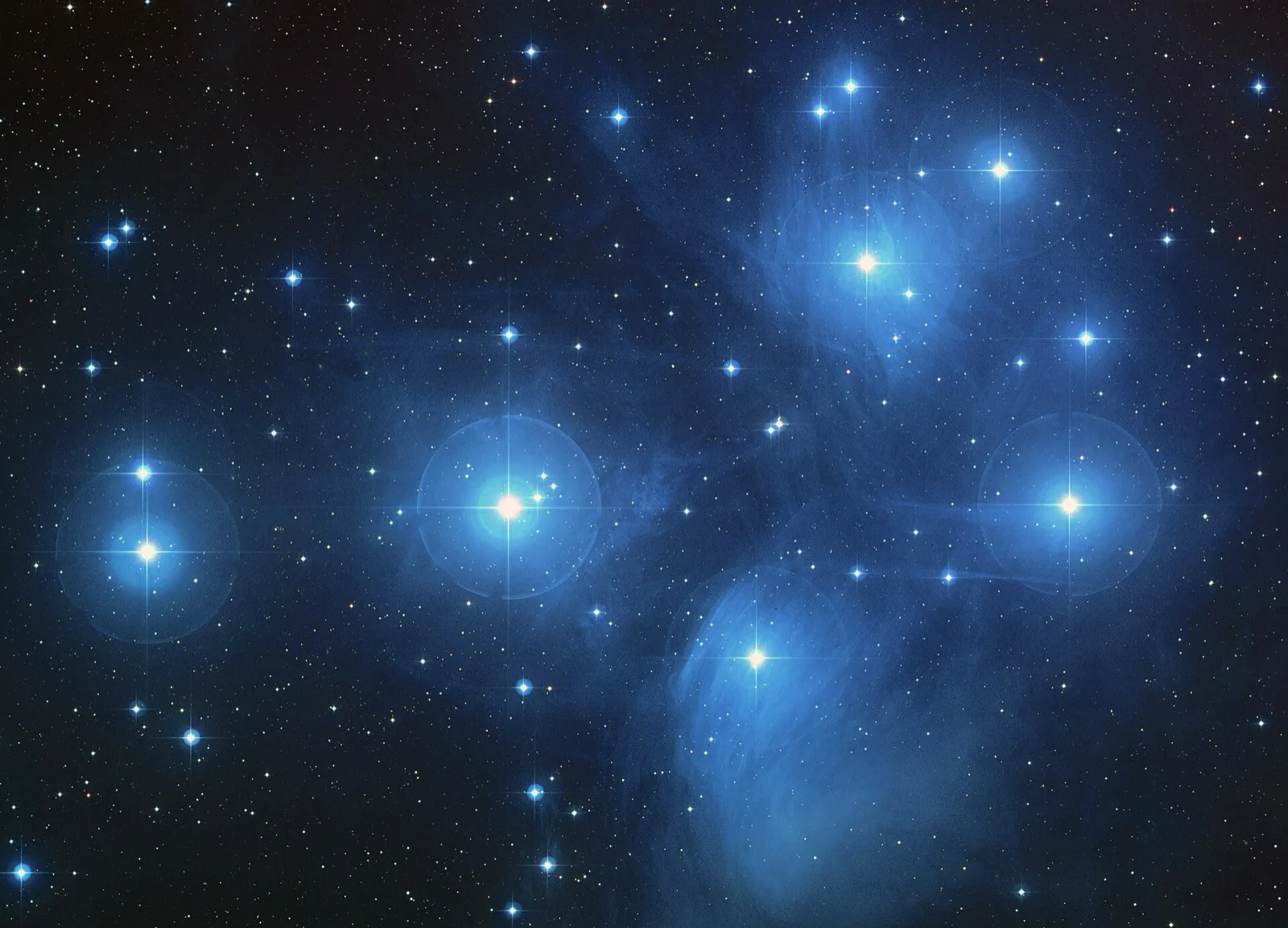 The PleiadesM45 · open star cluster
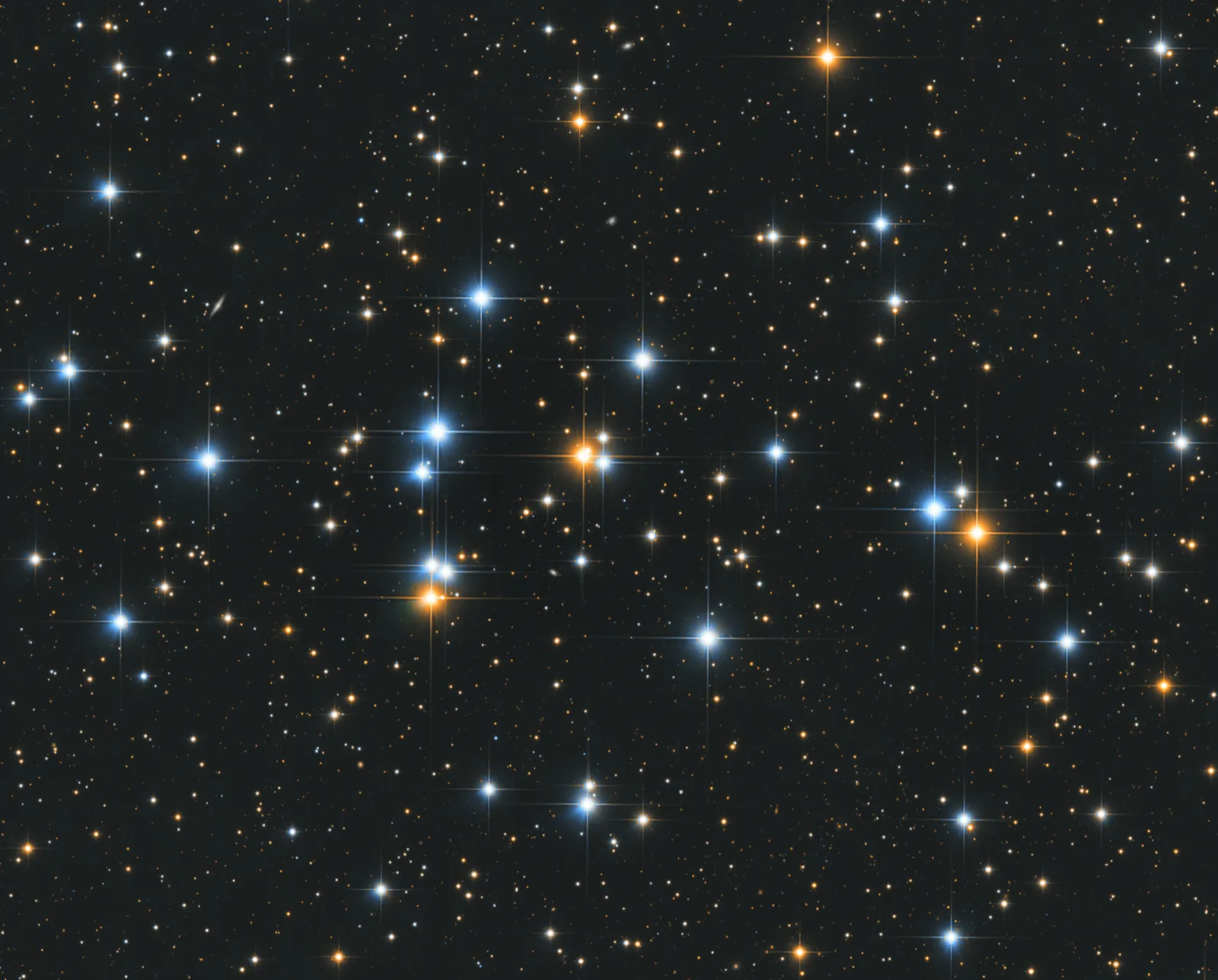 Beehive ClusterM44 · open star cluster
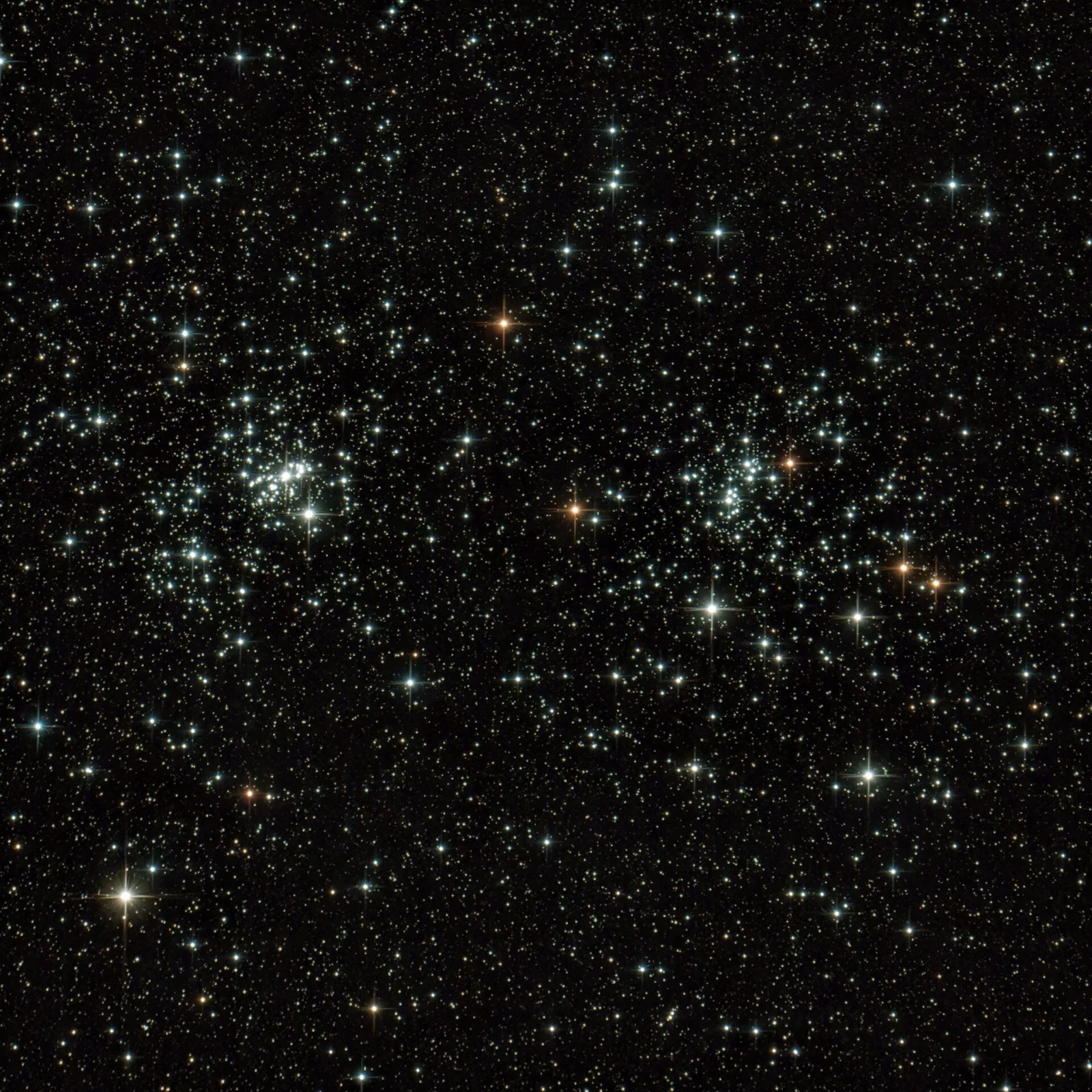 Double ClusterNGC 869 · open star cluster
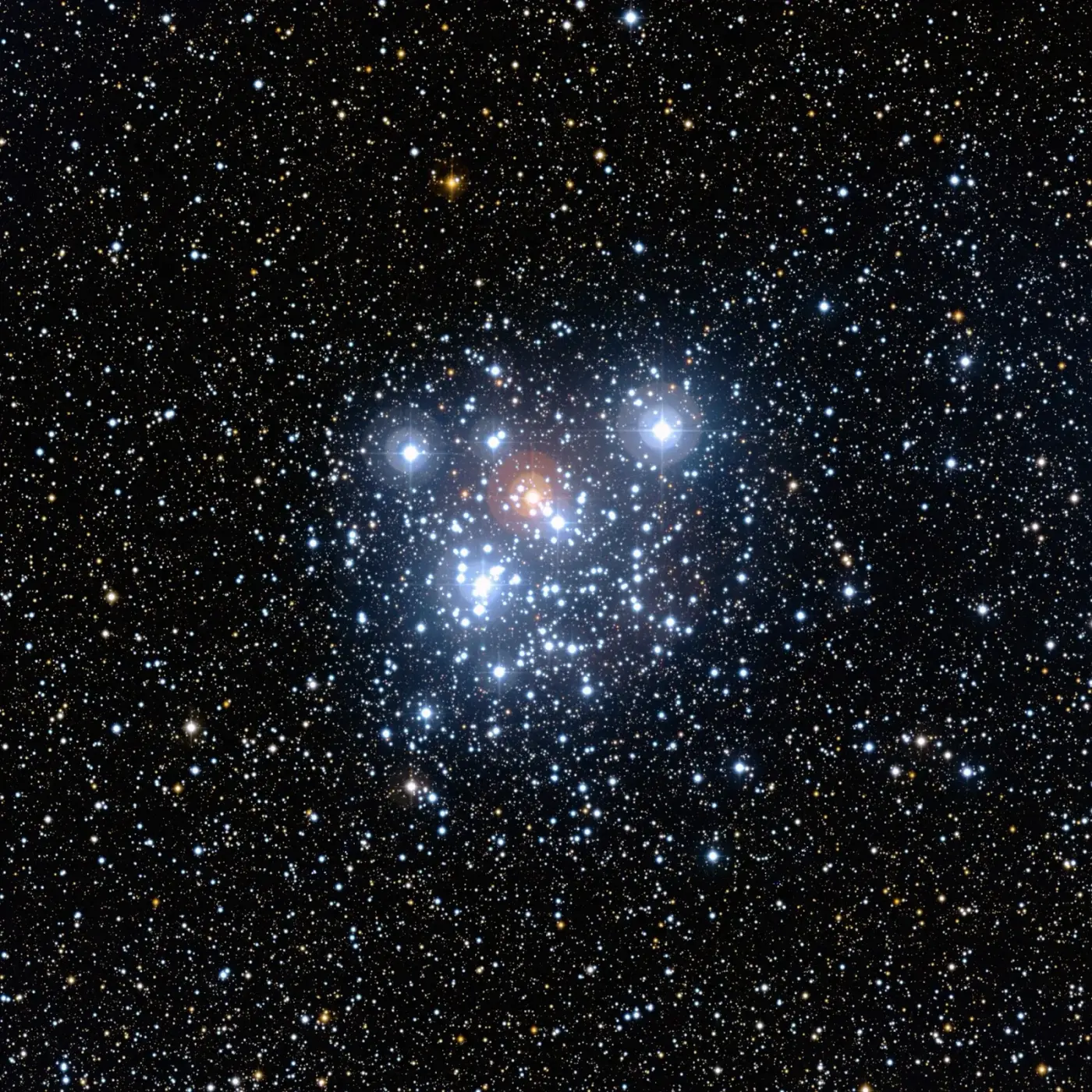 Jewel BoxNGC 4755 · open star cluster
Sources
- en.wikipedia.org
- messier.seds.org
- universetoday.com
- deepskycorner.ch
- Positions: astronomy-engine (Don Cross).