 SKY
Sky catalog › Star clusters
Messier 3
M3, NGC 5272 · A globular cluster in Canes Venatici
What is it?
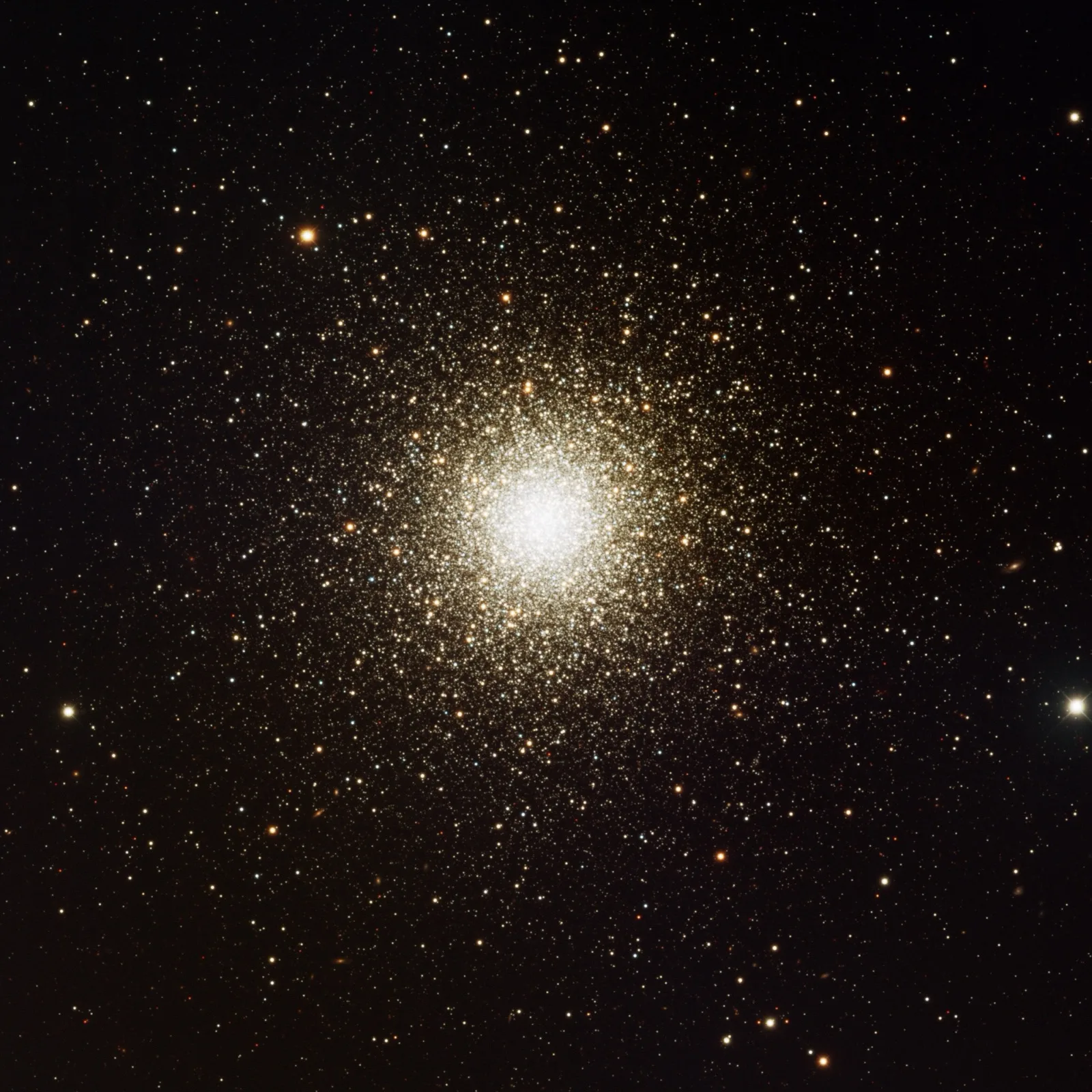
Messier 3 is a globular cluster. A tight ball of hundreds of thousands of very old stars.
Why Messier 3 is interesting
What you see: The round glow is about half a million stars in one dense ball. A few bluer, brighter ones near the core are blue stragglers, stars that look younger than they really are. esahubble.org
How it formed: M3's stars formed about 11.4 billion years ago, from early gas that held only about 3 to 5 percent as much of the heavy elements as the Sun has. en.wikipedia.org
To scale: All of M3 together weighs about 450,000 times as much as our Sun. en.wikipedia.org
Three things to know
- M3 holds about half a million stars and is one of the largest and brightest globular clusters.
- It has more known variable stars than any other globular cluster: at least 274 stars whose brightness rises and falls over time.
- M3 was the first object in his catalog that Charles Messier discovered himself, in 1764, but he thought it was a cloud with no stars.
12 more fun facts
- Blue stragglers, stars that look oddly young for their age, were first discovered in M3 by Allan Sandage in 1953. en.wikipedia.org
- M3 sits about 31,600 light-years above the flat disk of the Milky Way. en.wikipedia.org
- Solon Bailey began finding M3's variable stars in 1913, and new ones were still being identified as recently as 2025. en.wikipedia.org
- Some of M3's variable stars brighten and fade in rhythms tied to their true brightness, so astronomers use them as yardsticks to measure distance. science.nasa.gov
- Hubble's view of M3's core shows a relatively high number of blue stragglers, which look bluer and brighter than the other old stars around them. esahubble.org
- William Herschel resolved M3 into individual stars in 1784, 20 years after Charles Messier saw it and took it for a starless cloud. science.nasa.gov
- Many amateur astronomers rank M3 among the finest globular clusters in the northern sky, second only to M13. en.wikipedia.org
- M3 weighs about 450,000 times as much as the Sun. en.wikipedia.org
- M3's stars hold only about 3 to 5 percent as much of the heavy elements as the Sun does. en.wikipedia.org
- Through a 10-inch (25 cm) telescope, M3's bright core spans about 6 arcminutes, and the whole cluster about twice that. en.wikipedia.org
- At least 170 of M3's variable stars are RR Lyrae stars, a special kind of star that pulses in brightness. esahubble.org
- M3 lies about 38,800 light-years from the center of the Milky Way. en.wikipedia.org
In the game these unlock one by one as you keep photographing Messier 3.
At a glance
- Type
- Globular cluster
- Catalog
- M3, NGC 5272
- Constellation
- Canes Venatici
- Distance
- about 34,000 light-years (estimates range from about 32,600 to 34,000)
- Brightness
- magnitude 6.39
- Size in our sky
- about 18 arcminutes
- Discovered
- Charles Messier, May 3, 1764
- Position (J2000)
- RA 13h 42m, Dec +28.4°
Looking back in time
The light in this photo left Messier 3 about 34,000 years ago, when the Earth was in the last Ice Age: mammoths roamed and people painted caves by firelight.
How to see it yourself
Too faint for most eyes, but binoculars show it from a dark site. A small telescope shows its shape.
Finding it: Look in Canes Venatici, roughly halfway along the line from bright orange Arcturus in Bootes to Cor Caroli, the brightest star of Canes Venatici.
When to look: M3 is best seen on late spring and early summer evenings from mid-northern latitudes; NASA lists June as the best month.
What you will see: It is a hard naked-eye target even under dark skies, but it can be seen in binoculars. A moderate telescope shows a cloudy smudge even from light-polluted skies, with more stars resolving under darker skies.
Easy to confuse with:
- Messier 13: M13 is a bit brighter and lies on the side of the Keystone in Hercules, while M3 sits roughly halfway between Arcturus and Cor Caroli.
Best months: April is when it is highest around midnight. About two months later it is highest in the early evening, at around 8 to 9 PM.
Where on Earth: easy from the Northern Hemisphere. South of latitude 52°S it never climbs more than 10° above the horizon.
How it is photographed: long exposures through filters, then the frames are stacked, stretched and combined into color.
Name and story
The name: Charles Messier found it on May 3, 1764, and gave it the number 3. It was the first object in his catalog that he discovered himself, and he thought it was a nebula without stars. William Herschel resolved it into stars around 1784. It is also NGC 5272.
Record: M3 has 274 known variable stars, by far the highest number found in any globular cluster. With about half a million stars, it is one of the largest and brightest globular clusters ever discovered.
Explored by: Hubble has imaged the core of M3 in visible and infrared light. A 2019 ESA/Hubble picture of the week highlighted the cluster's many blue stragglers, stars that appear younger than they really are.
Test yourself
After every photo of Messier 3 the game asks one of these. A right answer earns sky points for your observatory.
What do M3's pulsing variable stars help astronomers measure?
- How old the Moon is
- How fast comets travel
- How far away things are (the answer)
Their rhythm of brightening and fading is tied to their true brightness. Comparing that with how bright they look tells astronomers their distance. science.nasa.gov
What did Charles Messier think M3 was when he found it in 1764?
- A hazy cloud with no stars (the answer)
- A far-off planet
- A comet heading toward the Sun
He saw only a round glow and took it for a nebula without stars. William Herschel resolved it into separate stars in 1784, 20 years later. science.nasa.gov
Point a telescope at Messier 3 in the game: capture it in real time, then develop the frames like an astrophotographer.
Point a telescope at Messier 3More star clusters
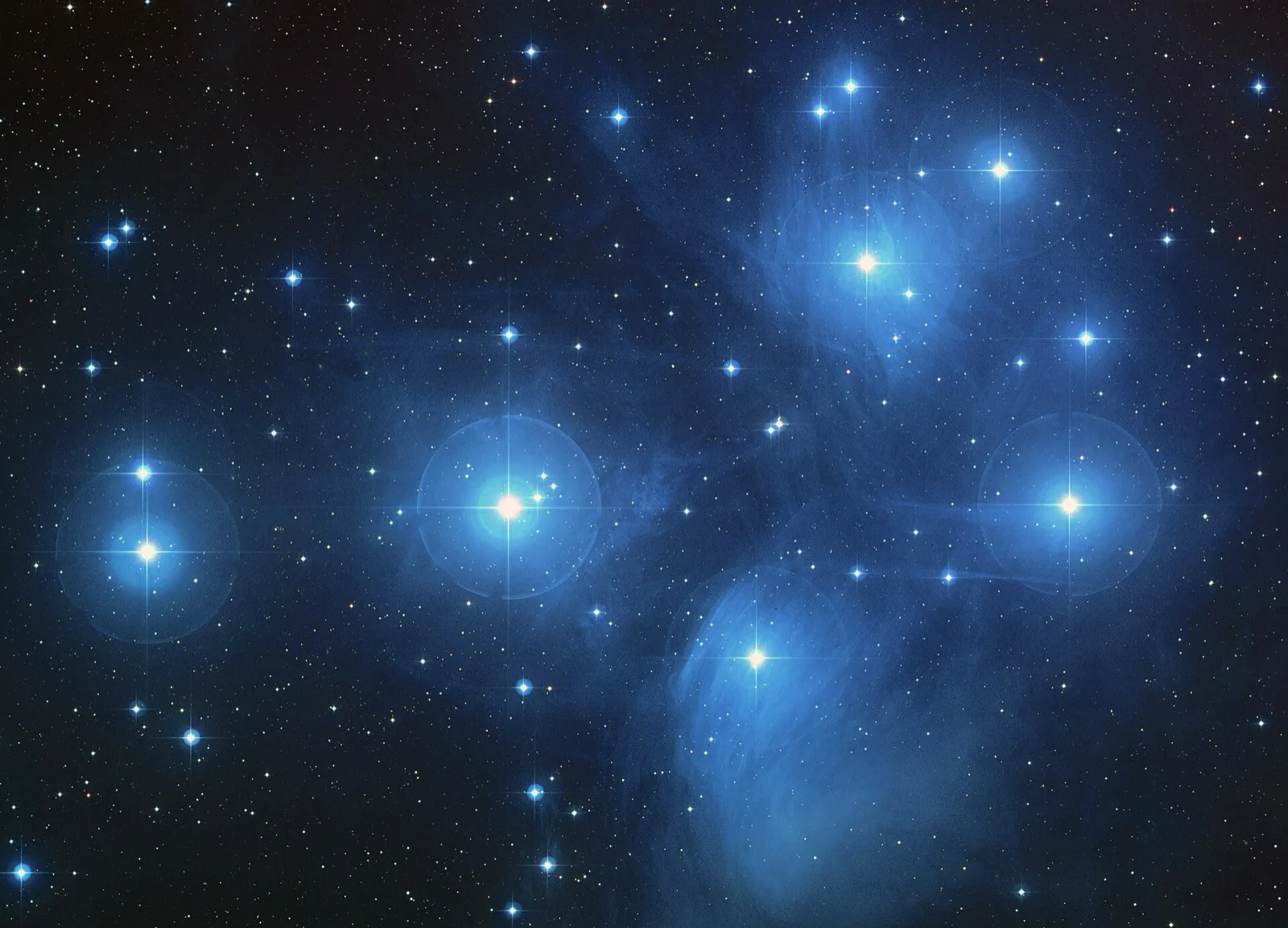 The PleiadesM45 · open star cluster
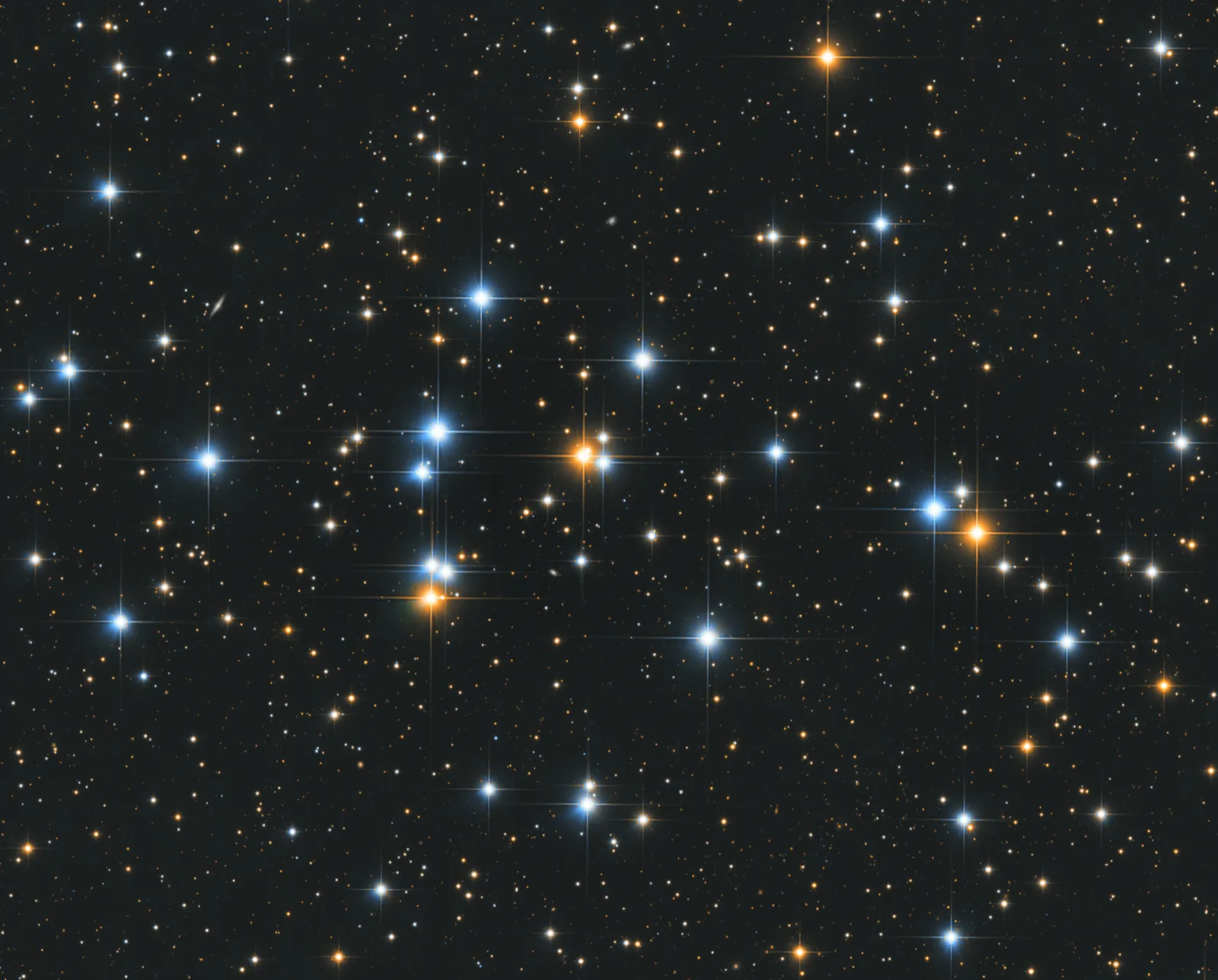 Beehive ClusterM44 · open star cluster
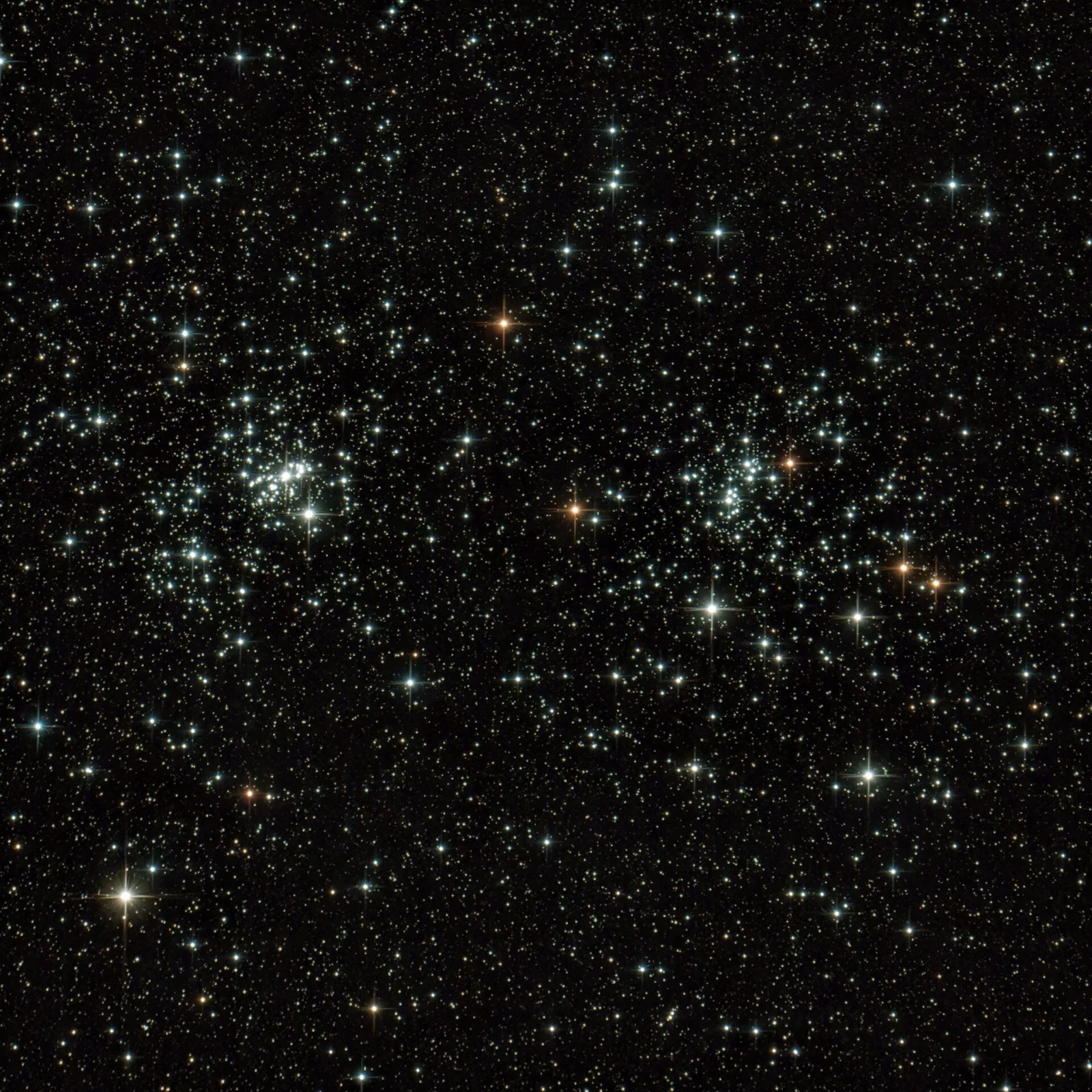 Double ClusterNGC 869 · open star cluster
 Jewel BoxNGC 4755 · open star cluster
Sources
- en.wikipedia.org
- science.nasa.gov
- en.wikipedia.org
- esahubble.org
- Positions: astronomy-engine (Don Cross).