 SKY
Sky catalog › Star clusters
Messier 2
M2, NGC 7089 · A globular cluster in Aquarius
What is it?
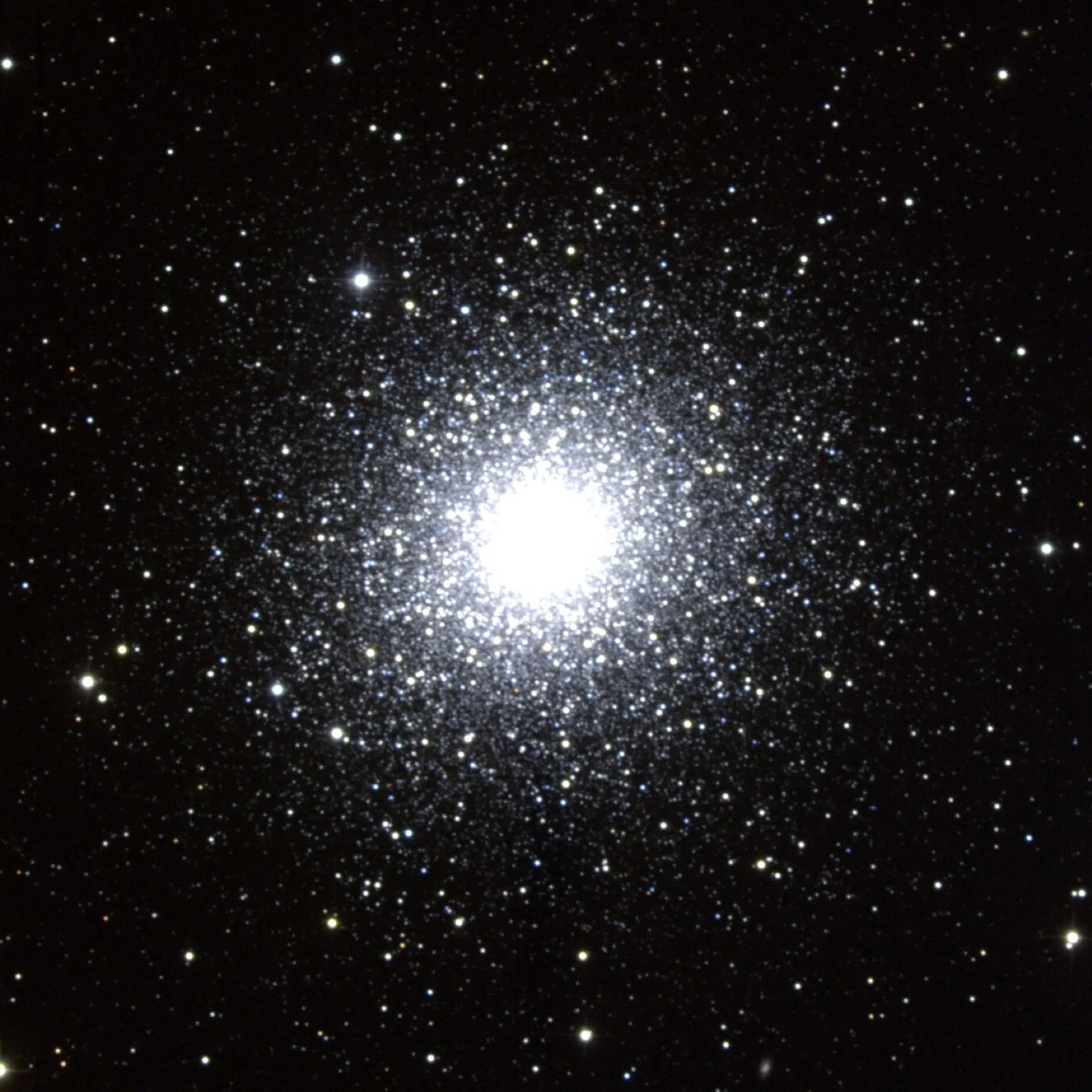
Messier 2 is a globular cluster. A tight ball of hundreds of thousands of very old stars.
Why Messier 2 is interesting
What you see: The round glow is about 150,000 stars packed into one ball. Its brightest stars are red and yellow giants. en.wikipedia.org
How it formed: M2 is about 12.5 billion years old. It may be a leftover from the Gaia Sausage, a dwarf galaxy that merged with the Milky Way long ago. en.wikipedia.org
To scale: M2 is about 175 light-years across, so light itself needs about 175 years to cross from one side of the ball to the other. esahubble.org
Three things to know
- M2 holds about 150,000 stars in a ball about 175 light-years wide, making it one of the larger globular clusters known.
- It is about 12.5 billion years old, one of the older star clusters that belong to the Milky Way.
- Charles Messier saw it in 1760 but thought it was a cloud with no stars; William Herschel was the first to see its separate stars, in 1783.
12 more fun facts
- Data from the Gaia spacecraft revealed a stream of stars pulled out of M2, stretching about 45 degrees across the sky and about 300 light-years wide. en.wikipedia.org
- M2 may be a leftover from the "Gaia Sausage", the remains of a dwarf galaxy that merged with the Milky Way long ago. en.wikipedia.org
- M2's stream of escaped stars may have been nudged by the Large Magellanic Cloud. en.wikipedia.org
- M2 sits almost exactly on the celestial equator, so it can be seen from everywhere on Earth. freestarcharts.com
- Large telescopes show a strange dark lane crossing the northeast edge of M2. freestarcharts.com
- Jean-Dominique Maraldi came upon M2 on September 11, 1746, while observing a comet with Jacques Cassini. freestarcharts.com
- M2 was the first globular cluster added to Messier's catalog. science.nasa.gov
- Its brightest stars are red and yellow giants. en.wikipedia.org
- M2 is noticeably elliptical rather than perfectly round. en.wikipedia.org
- Most of M2's mass is packed into its center, with streams of stars extending outward. esahubble.org
- M2 lies in the halo of our galaxy, below the Milky Way's southern pole. en.wikipedia.org
- By the rhythm of its pulsating stars M2 belongs to "Oosterhoff type II", a group normally older than 13 billion years, yet M2's estimated 12.5 billion years makes it an oddball. en.wikipedia.org
In the game these unlock one by one as you keep photographing Messier 2.
At a glance
- Type
- Globular cluster
- Catalog
- M2, NGC 7089
- Constellation
- Aquarius
- Distance
- about 37,500 light-years (estimates range from about 37,000 to 38,000)
- Brightness
- magnitude 6.5
- Size in our sky
- about 16 arcminutes
- Discovered
- Jean-Dominique Maraldi, 1746
- Position (J2000)
- RA 21h 33m, Dec -0.8°
Looking back in time
The light in this photo left Messier 2 about 37,500 years ago, when the Earth was in the last Ice Age: mammoths roamed and people painted caves by firelight.
How to see it yourself
Too faint for most eyes, but binoculars show it from a dark site. A small telescope shows its shape.
Finding it: Find Sadalsuud and Sadalmelik, the two brightest stars of Aquarius. M2 lies about 5 degrees north of Sadalsuud, and the three make a large right-angled triangle.
When to look: Best on evenings from July to October; NASA lists October as the best month.
What you will see: M2 is at the edge of naked-eye visibility from a dark site. In 7x50 or 10x50 binoculars it looks like an out-of-focus star or a tiny cotton ball. An 8-inch telescope resolves some outer stars, and a 12-inch shows many stars across its face.
Easy to confuse with:
- Messier 15: M15 is a similar globular about 4 degrees northwest of Enif in Pegasus, while M2 is about 5 degrees north of Sadalsuud in Aquarius.
Best months: August is when it is highest around midnight. About two months later it is highest in the early evening, at around 8 to 9 PM.
Where on Earth: close to the celestial equator, so it can be seen from almost everywhere on Earth.
How it is photographed: long exposures through filters, then the frames are stacked, stretched and combined into color.
Name and story
The name: M2 is the second object in Charles Messier's catalog. Jean-Dominique Maraldi discovered it in 1746, and Messier came upon it again in 1760 but described it as a nebula without stars. William Herschel first resolved its stars in 1783. It is also NGC 7089.
Record: ESA/Hubble calls M2 one of the largest globular clusters of its kind and one of the oldest associated with the Milky Way, with about 150,000 stars in a ball about 175 light-years across.
Explored by: A 2019 ESA/Hubble picture of the week showed M2 in ultraviolet, visible and near-infrared light. More recently, data from ESA's Gaia spacecraft traced a long stream of stars that M2 has lost over time.
Test yourself
After every photo of Messier 2 the game asks one of these. A right answer earns sky points for your observatory.
What did the Gaia spacecraft find trailing out of M2?
- A long stream of escaped stars (the answer)
- A ring of glowing gas
- A jet from a black hole
Gaia traced stars pulled out of M2 in a stream about 300 light-years wide that stretches about 45 degrees across our sky. en.wikipedia.org
Who discovered M2, in 1746?
- Jean-Dominique Maraldi (the answer)
- William Herschel
- Charles Messier
Maraldi found it in 1746. Messier came upon it again in 1760 and called it a starless nebula, and Herschel first saw its separate stars in 1783. en.wikipedia.org
Point a telescope at Messier 2 in the game: capture it in real time, then develop the frames like an astrophotographer.
Point a telescope at Messier 2More star clusters
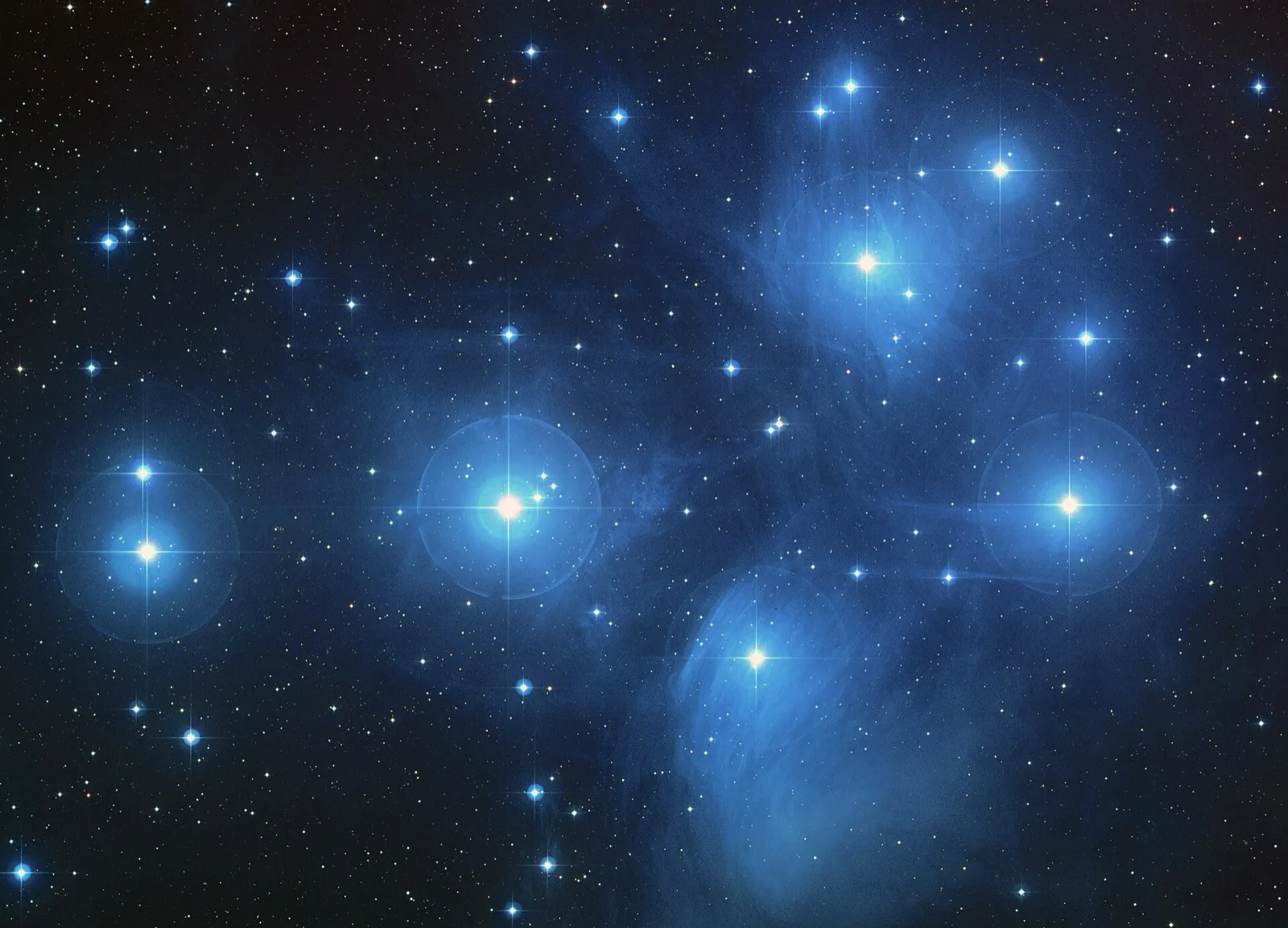 The PleiadesM45 · open star cluster
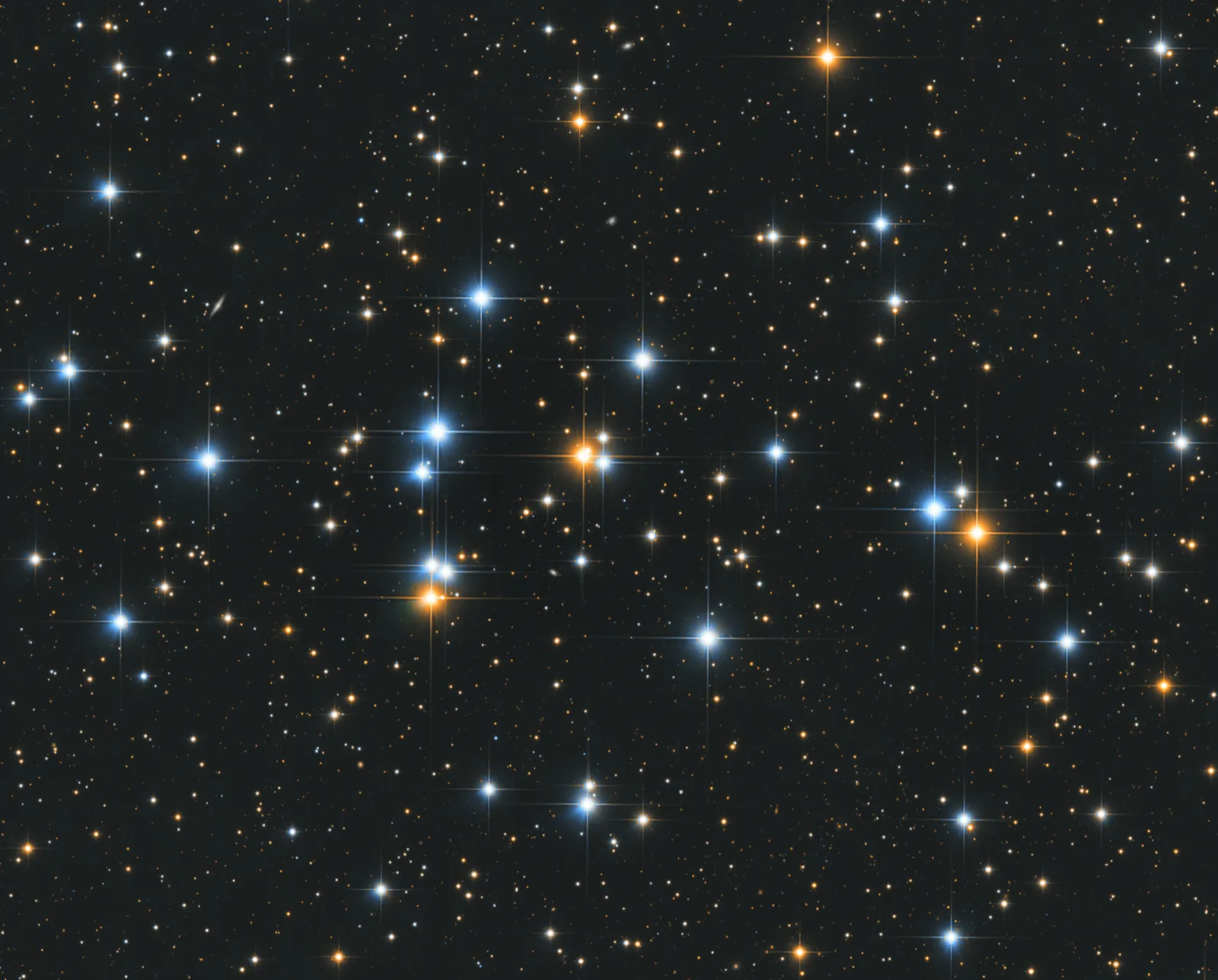 Beehive ClusterM44 · open star cluster
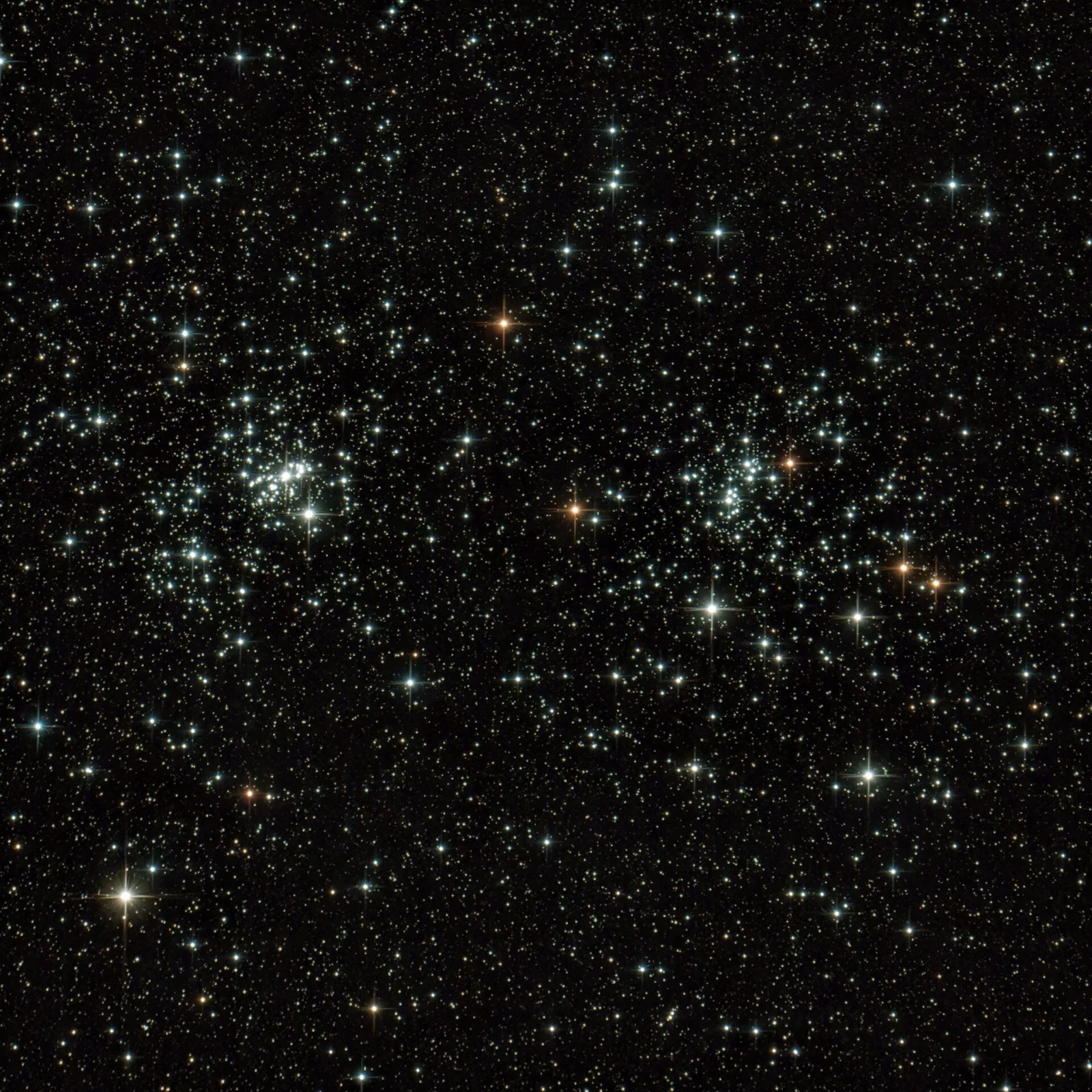 Double ClusterNGC 869 · open star cluster
 Jewel BoxNGC 4755 · open star cluster
Sources
- en.wikipedia.org
- science.nasa.gov
- freestarcharts.com
- esahubble.org
- astronomy.com
- Positions: astronomy-engine (Don Cross).