 SKY
Sky catalog › Nebulae
Horsehead Nebula
A dark nebula in Orion
What is it?
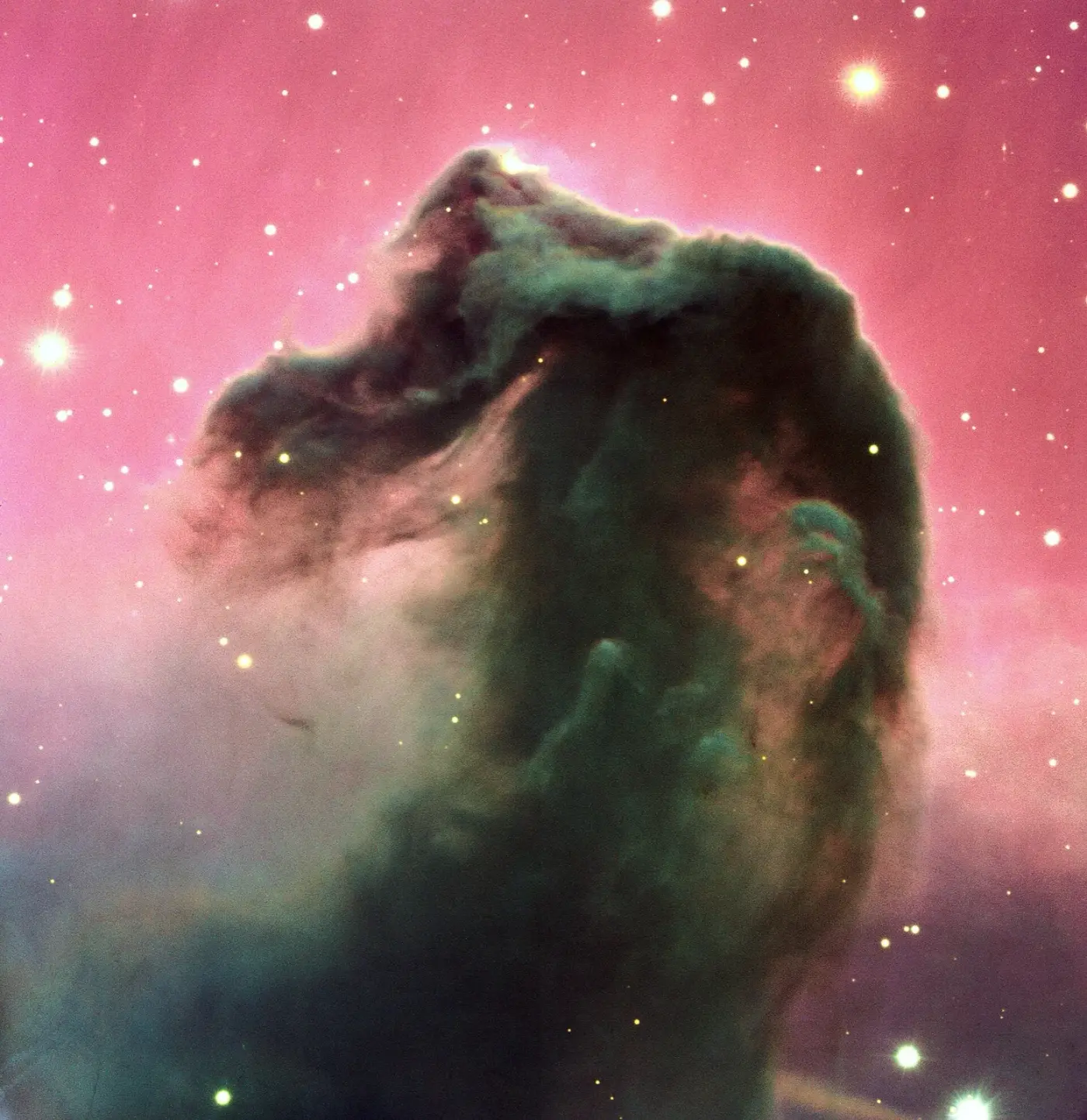
Horsehead Nebula is a dark nebula. A cold, thick cloud of dust that blocks the light of whatever glows behind it.
Why the Horsehead Nebula is interesting
What you see: The dark horse head is a thick cloud of dust blocking the light behind it. The red glow is hydrogen gas lit up by the nearby hot star Sigma Orionis. en.wikipedia.org
How it formed: It is a pillar sticking out of the huge Orion B cloud. Its thick clumps resist erosion better than the thinner gas around it, which has blown away, but it has about 5 million years left. science.nasa.gov
To scale: The Horsehead has a radius of about 3.5 light-years, so light would need about 7 years to cross it. en.wikipedia.org
Three things to know
- The Horsehead is a cloud of thick dust that blocks the glowing gas behind it, so we see its dark shape.
- It was discovered in 1888 by Williamina Fleming, who spotted it on a photograph.
- It sits just south of Alnitak, the easternmost star of Orion's Belt.
12 more fun facts
- The Horsehead will not last forever: astronomers estimate it has about 5 million years left before it wears away. science.nasa.gov
- In 2024 the Webb telescope took the sharpest infrared images yet of the Horsehead's mane, zooming in on a piece about 0.8 light-years wide. science.nasa.gov
- The Horsehead's pillar survives because its thick clumps of material are harder to erode than the thinner gas around it, which has already blown away. science.nasa.gov
- The red glow behind the Horsehead comes from hydrogen gas lit up by the nearby hot star Sigma Orionis. en.wikipedia.org
- Before working at Harvard Observatory, Williamina Fleming was a maid in the home of the observatory's director, Edward Pickering. en.wikipedia.org
- Fleming described the spot as a semicircular indentation 5 arcminutes across, 30 arcminutes south of Zeta Orionis, yet the first Index Catalogue credited only Pickering. en.wikipedia.org
- In 1919 E. E. Barnard listed it as Barnard 33, a dark mass about 4 arcminutes across on a glowing strip south of Zeta Orionis. britastro.org
- Euclid photographed the Horsehead in about one hour for its first images in November 2023, hoping to find newborn stars, brown dwarfs and young Jupiter-mass planets nearby. esa.int
- Hubble's 2013 infrared portrait looks through the Horsehead's dust, turning the dark silhouette into a pale, glowing shape full of folds. esahubble.org
- New low-mass stars are being born at the base of the Horsehead. en.wikipedia.org
- The Horsehead has a radius of about 3.5 light-years. en.wikipedia.org
- The Horsehead sticks out from the western edge of the huge Orion B molecular cloud, where gas and dust are still collapsing. science.nasa.gov
In the game these unlock one by one as you keep photographing the Horsehead Nebula.
At a glance
- Type
- Dark nebula
- Constellation
- Orion
- Distance
- about 1,375 light-years
- Brightness
- magnitude 6.8
- Size in our sky
- 8 x 6 arcminutes
- Discovered
- Williamina Fleming, 1888, on a photographic plate at Harvard College Observatory
- Position (J2000)
- RA 5h 41m, Dec -2.5°
Looking back in time
The light in this photo left the Horsehead Nebula about 1,375 years ago, when the Maya were building great stone cities in Central America.
How to see it yourself
One of the hardest objects to see by eye: it takes a large telescope, a very dark sky and an H-beta filter. Long-exposure photos show it easily.
Finding it: Find Alnitak, the eastern (left) star of Orion's Belt. First locate the Flame Nebula just east of Alnitak, then look about half a degree south of the star along the faint glowing strip IC 434 for a tiny dark notch.
When to look: Best on winter evenings from mid-northern latitudes; NASA says the nearby Orion Nebula, just below Orion's Belt, is best in January. From mid-southern latitudes Orion stands in the northern sky on January evenings.
What you will see: Not visible to the naked eye or binoculars, and one of the hardest famous objects to see in a telescope. It usually needs a dark, moonless sky, an H-beta filter and a fairly large telescope, often 12 inches or more, with Alnitak kept out of view.
Easy to confuse with:
- Flame Nebula (NGC 2024): The Flame is a brighter glow with dark lanes right beside Alnitak, while the Horsehead is a small dark notch farther south against a faint red strip.
Best months: December is when it is highest around midnight. About two months later it is highest in the early evening, at around 8 to 9 PM.
Where on Earth: close to the celestial equator, so it can be seen from almost everywhere on Earth.
How it is photographed: long exposures through filters, many hours in total, which is why the game sends it to a big observatory mirror. then the frames are stacked, stretched and combined into color.
Name and story
The name: Its dark outline looks like the head and neck of a horse rising out of a glowing cloud. Williamina Fleming discovered it in 1888 on a photographic plate at Harvard College Observatory, and E. E. Barnard listed it as Barnard 33 in 1919.
Record: In 2024 NASA described Webb's images of the Horsehead as the sharpest infrared images to date of this part of the nebula, revealing small structures on its glowing edge for the first time.
Explored by: Hubble imaged the Horsehead for its 11th year in orbit and again in April 2013 for its 23rd, this time in infrared with Wide Field Camera 3, installed in 2009. The infrared view pierces the dust and shows delicate folds of gas that are hidden in visible light.
Test yourself
After every photo of the Horsehead Nebula the game asks one of these. A right answer earns sky points for your observatory.
Why does the Horsehead Nebula look dark?
- It is an empty hole with no stars
- Thick dust blocks the glowing gas behind (the answer)
- It is the shadow of a black hole
The dense dust cloud blocks light, so it shows as a dark silhouette against red hydrogen gas lit up by the nearby hot star Sigma Orionis. en.wikipedia.org
How was the Horsehead Nebula first found in 1888?
- On a photo plate at Harvard (the answer)
- By a telescope in space
- By eye in a small backyard telescope
Williamina Fleming, who had once worked as a maid in the observatory director's home, spotted it on a photographic plate at Harvard College Observatory. en.wikipedia.org
Point a telescope at the Horsehead Nebula in the game: capture it in real time, then develop the frames like an astrophotographer.
Point a telescope at the Horsehead NebulaMore nebulae
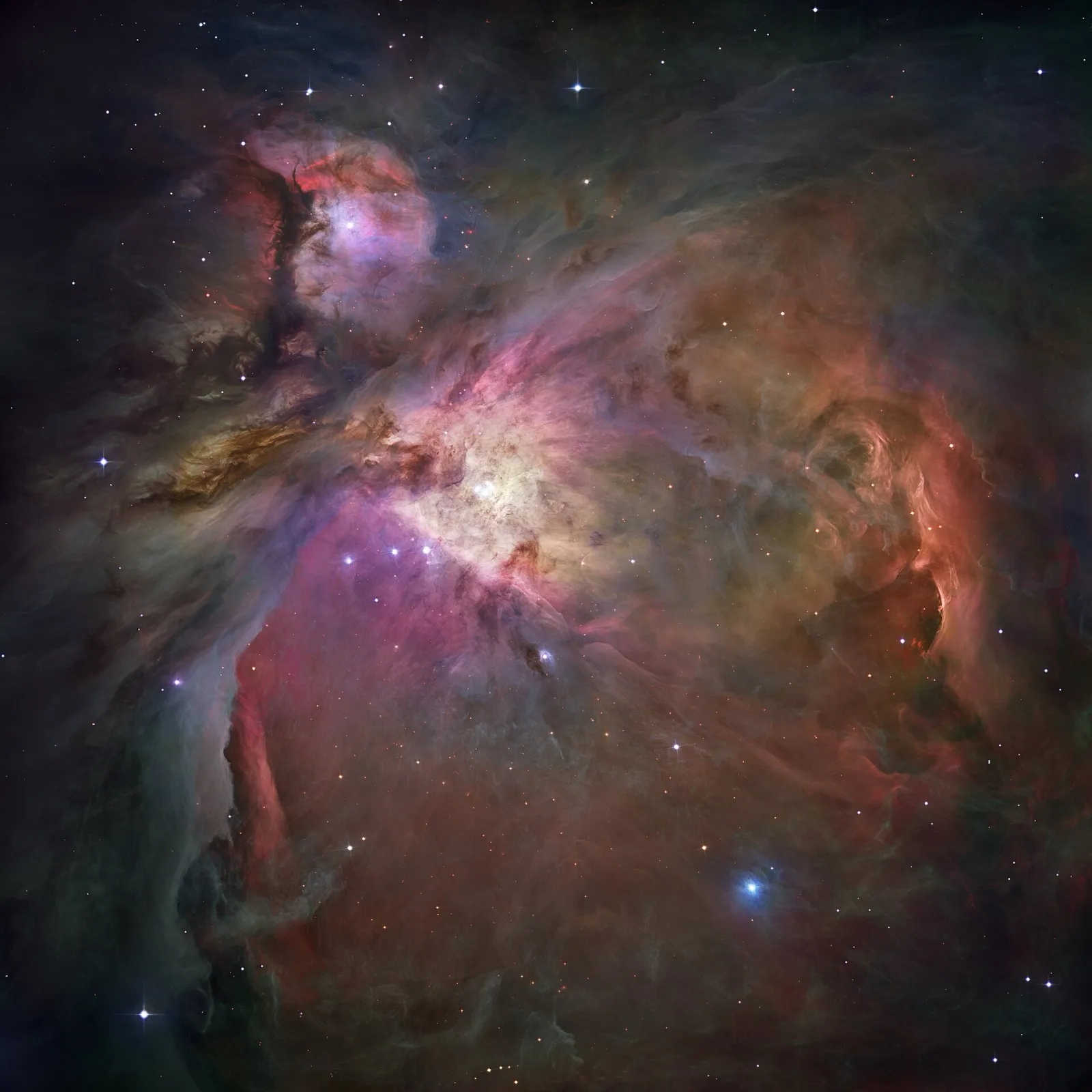 Orion NebulaM42 · star-forming nebula
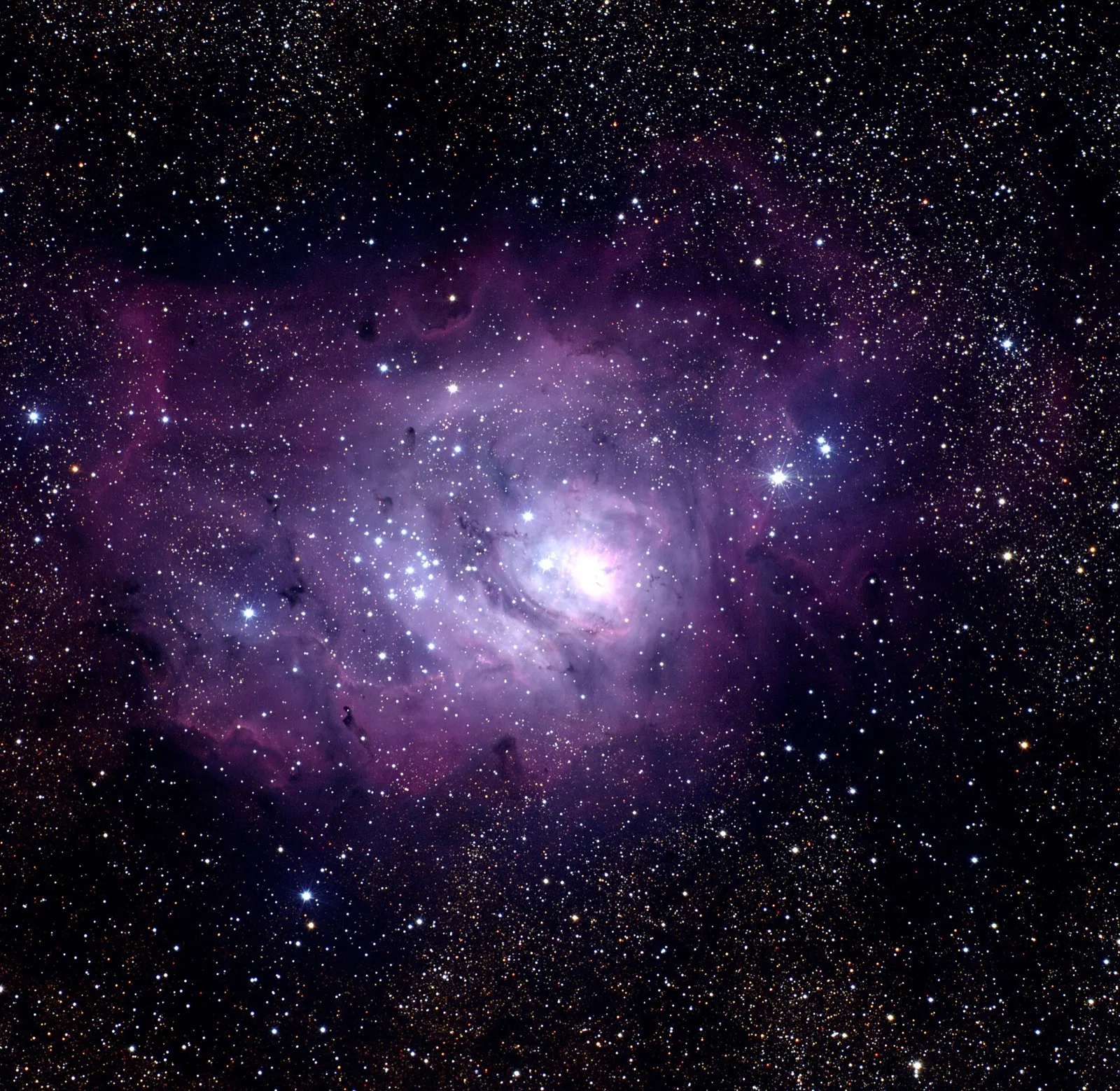 Lagoon NebulaM8 · star-forming nebula
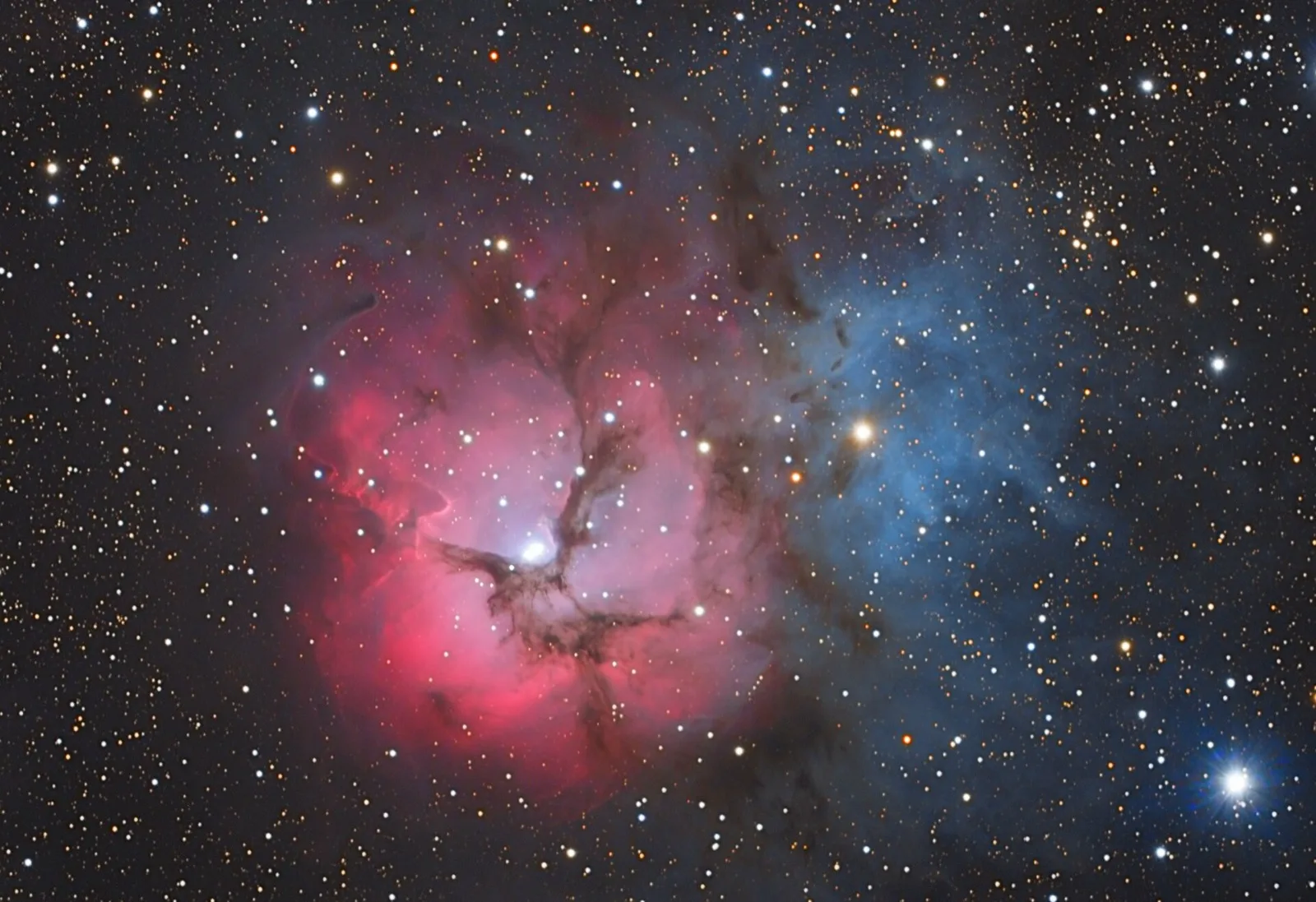 Trifid NebulaM20 · star-forming nebula
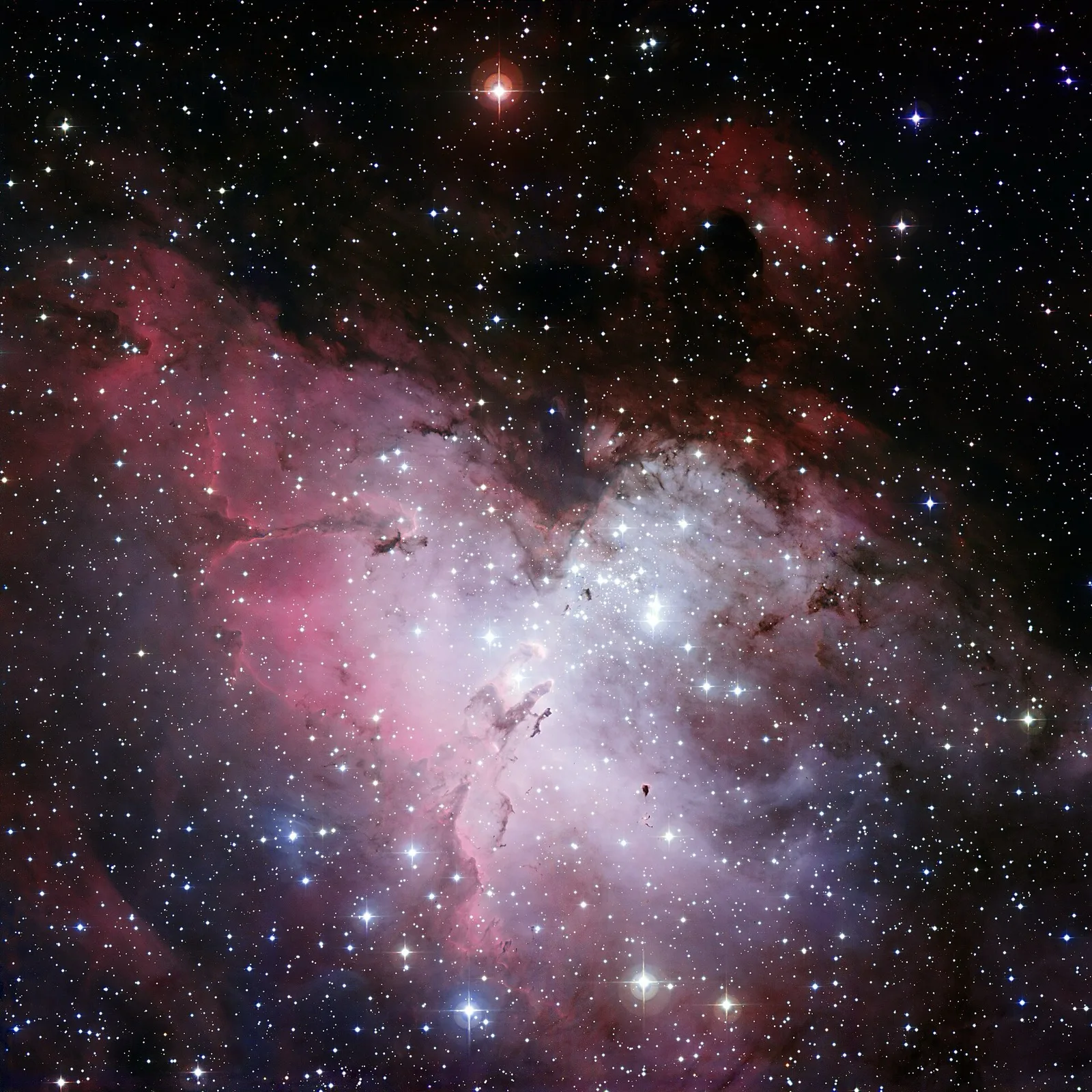 Eagle NebulaM16 · star-forming nebula
Sources
- en.wikipedia.org
- science.nasa.gov
- en.wikipedia.org
- britastro.org
- esa.int
- esahubble.org
- skyatnightmagazine.com
- science.nasa.gov
- Positions: astronomy-engine (Don Cross).